
Podcast: Play in new window | Download
Subscribe: RSS
Tim Fulton 00:00
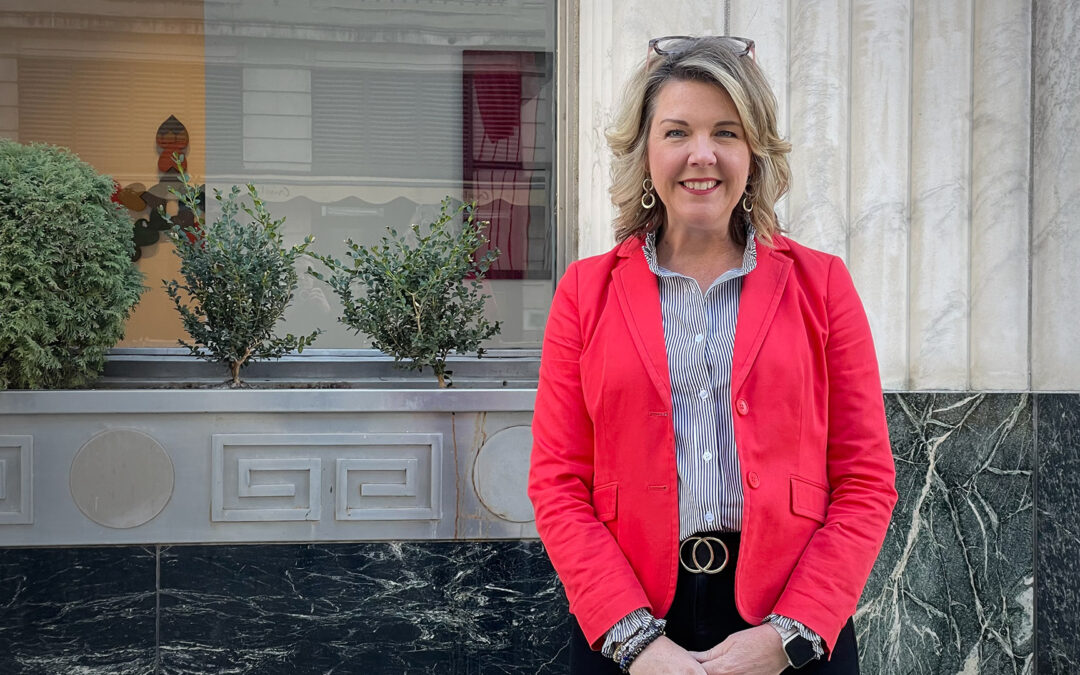
Tim, welcome to the confluence cast presented by Columbus underground. We are a weekly Columbus centric podcast focusing on the civics, lifestyle, entertainment and people of our city. I’m your host. Tim Fulton this week. This is the second of two conversations I recorded with the Democratic candidates for Ohio Secretary of State. If you caught the first one with Dr Brian Hambly, welcome back. If not, it’s worth going back to but this one stands on its own today, my interview with State Representative Allison Russo. Russo has been in the Ohio House since 2019 when she flipped a Republican, held seat as a first time candidate and went on to serve as House Minority Leader, the top Democrat in the chamber. Before politics, she spent more than two decades in public health policy, and she grew up in rural Mississippi, raised by a single mom who worked her way into a union carpentry apprenticeship. We talk about what it’s like to lead a caucus under a super majority, how she thinks about the role of Secretary of State, what 2026 looks like for Ohio Democrats, and why she believes primaries are actually good for the party. If you haven’t already, I’d recommend going back to the overview episode where I lay out both candidates and the key fault lines in this race. And if you missed it, the full conversation with Dr Ryan Hambly is already available. You get more information on what we discussed today in the show notes for this episode at the confluence cast, Comm, enjoy the interview. Sitting down here with State Representative Allison Russo, also candidate for Ohio Secretary of State Representative Russo, how are you? I’m doing great. Glad to be here. Absolutely. Tell us a little bit about yourself and what brings you to this race?
Allison Russo 02:02
Yeah, so I am currently in the legislature. I’ve been a state representative since 2019 actually flipped a seat in 2018 from Republican to Democrat, running for the first time, came into the state house immediately set to work on, you know, how do we best support working families, issues around caregiving needs, issues around health care. My background is in public health policy. I spent 20 plus years actually still do some of that work in public health policy. Became the House Minority Leader, which is the top Democrat in the Ohio House, served in that for three and a half years, stepped down this past June from that leadership position to run statewide for Ohio Secretary of State, and now I’m running because I believe so strongly that Ohioans deserve better than what we have had for the last three decades of Republican rule of the state, and the pathway to getting there is through The power of your vote, and the Secretary of State is the state’s chief elections officer, so we need a Secretary of State who’s going to be an advocate for voting and voters talk a
Tim Fulton 03:10
little bit more about your background and why you initially ran.
Allison Russo 03:15
Well, I always call myself the accidental politician. Okay, I certainly did not set out to be someone who was in elected office or to run for office. Did not grow up in a political family. Actually, not even an Ohio native, if you hear a little bit of a southern accent that’s not imagined, was born and raised in rural Mississippi, raised by a single mom who found herself at 21 with two little girls, and she only had a GED education, and so I had to figure out how to make ends meet. She was fortunate. When I was about four or five years old, she got an opportunity to join an apprenticeship program with a local carpenters union, and so my mother became a carpenter and was often the only woman on a job site. And it was hard work, as you can imagine, but she, to this day, describes that job as the opportunity that moved us from poverty to middle class life. She was able to have stable wages, stable benefits, buy our first home, she went on much later and did other things and earned her degrees as well. But for us, she felt very strongly that education was our pathway to opportunity, and so even though we didn’t have a lot of money or resources, I was able to go to college on scholarship, student loan, Pell Grants, work study. You know, all the things that you do to make that work when you don’t have a lot of resources. Got a degree in microbiology about as far away from politics as possible. Went on and studied public health for graduate studies public health policy, got a doctoral degree and spent my career. We are working in the space of healthcare policy, and how do we make care more affordable, better outcomes, especially for vulnerable populations, for veterans, for military families,
Tim Fulton 05:13
was that sorry? Was that in the public sector, or
Allison Russo 05:16
was in the public sector? Yeah, so working for a number of federal agencies in this space, doing consulting work for them, but working in this space for a number of years. And then for me, the real turning point came in 2016 up to that point, I always describe myself as an engaged and informed voter, but on election night in 2016 I think, like many people, deeply concerned about what I saw and the results that were coming back at the time my youngest of three children, my daughter, was only six weeks old, so I was also up with a newborn, and I remember very vividly Having this realization that it was not enough to stay on the sidelines and only be an engaged and informed voter. I needed to do more, and that meant for me, getting off the sidelines and in the arena. Had no idea what that meant on that night, but it was just this desire to do more. And what it did mean was, in 2017 If you will recall, what was happening, both in Congress and at the state house, there was an attack on the the first time it’s happening again. But there was an attack on the affordable care act to repeal it. There was an attack in Ohio in the state budget to roll back Medicaid expansion. I knew that that would eliminate close to or eliminate coverage for close to 1 million Ohioans. Those two actions, and so I was working with a number of people to help them better advocate with their member of Congress. Better advocate with their state legislator. It turns out, the the gentleman who held the seat that I happened to live in, he was a Republican. He was running for another he decided to run for another office. And someone said, oh, you should consider running for office. And my first response was, you were out of your mind, absolutely not, you know, because I had three kids and I had a career, and I had never really thought about doing that before, but then I did remember, you know, that promise that I made to myself and my daughter that I would not stay on the sidelines, and I knew that we needed people in office who were there to problem solve, to get things done, who Were there to represent the values of our communities. And so knowing absolutely nothing about running for office or a campaign, I raised my hand and said, You know what? I think I’m going to do this. And really, the campaign started in early 2018 with a couple of mom friends, hockey mom friends, my kids play hockey and US knocking on doors and having conversations and doing house parties and went from there. Actually won a three way primary, okay, and then went on to win the general election in November of 2018 so again, this was a seat that the Republican won in 2016 by 20 points. Right? Election Night, we flipped that seat and I won it by five points.
Tim Fulton 08:30
Okay, so mechanics a little bit Sure. So first of all, want to note that you are part of that class of female politicians who sort of that wave right that we identify as, you know, more female seats held in the Senate, more female seats held in the house. And I don’t think a whole lot of commentary or even discussion goes around, what happened to the Ohio State House at that time? Yeah, yeah. So just stating that as fact, yes, after that, want to talking a little bit then about mechanics, like, Did you so you said you had a three way primary that you first centered, yeah, did you have support? Or did you feel like you had support from the state party or from the county party at that point? I what? Did that look like at that time?
Allison Russo 09:23
Yeah. So interestingly enough, all three of the candidates when we ran in 2018 in that primary, we were all women, okay, all first time candidates Okay, who had never written before. Typically, the state party does not get involved in these primaries, especially for State House races, yeah, nor necessarily do county parties, unless you know there’s an incumbent running or someone who has prior elected office. So in the case of my primary, neither weighed in in the primary. So it truly was grassroots, door knocking, door. Knock You. I mean, we knocked 45,000 doors by the time we were done with that entire election cycle, the army of volunteers that I had, and it was, you know, I was smart enough to know that I didn’t know a lot about running a campaign. So I reached out to a couple of folks who had been in campaigns before, very involved. Had run them, so definitely got some people around me to help direct me. But when you’re running a primary, especially as the first time Kena did, I mean, up until you win that primary, you’re not getting a lot of institutional or donor support outside of just your personal network. So it is truly you know you’re you are just grinding it out.
Tim Fulton 10:43
Well, do you know how you’re doing even, because I don’t imagine you have enough money for
Allison Russo 10:47
you absolutely do not have enough money for polling. And typically, let me just be clear, and a lot of State House races, yeah, don’t have enough resources for polling. So you’re going into a lot of this blind so, you know, I had no idea. I had a sense. Because, you know, I knew that I was doing the work, but the other two women also were doing a lot of work as well, and raising money. So I think, you know, for that primary, raised about $45,000 which is, you know, pretty for a competitive primary in a district like what I was running to represent. You know, that’s not that unusual, but, yeah, so. But you know, I was part of a number of women who were stepping up to run for the first time in 2018 really, it had started in 2017 because we saw in other State House races, in other states like Virginia, for example, this wave of women, especially, stepping up to run for the first time, winning their races. And that certainly carried over for us here in 2018 and you’re right. We had a number of women come into Congress, into the Ohio State House, really, both Democrat and Republican women. There are a lot of articles written about us that year coming in, many of us first time candidates, yeah, so as part of that class. And you know now we see some of those same women running for governor and winning, yeah, in Virginia, in New Jersey. They were part of that wave in 2018 as well.
Tim Fulton 12:19
Talk a little bit you were minority leader in when there was a super majority on the other side. Talk about how seeing that and working within that system, is that a motivator for you running for secretary of state?
Allison Russo 12:36
Absolutely. So first of all, the entire time at Bennett legislature, we’ve been under a super majority. I sometimes think it would be lovely, number one, to be in the majority, but number two, even to be and just a simple fair fight minority in somewhat of a fair fight. Yeah. So, you know, I always tell people being in the super majority, I mean, it is hard, it is really difficult. And you don’t have a lot of power, but you do learn ways to be effective in spite of that imbalance. And you know, we have a number of examples of both state legislators as well as opportunities that we have taken to use the small amount of power that we have and use it to our advantage, and it’s been effective, and you learn to be very strategic. You learn to be very creative. You learn that information is your friend, and part of your power is getting as much information as you possibly can. Building relationships with people is also very helpful and beneficial. Those are all things that I think make anyone, whether they’re continuing on with the legislative career or in other forms of public service, you know, incredible in how they will do their job because of the amount of work and effort that it takes to do and get anything accomplished, okay? And you know, you learn not to take anything for granted and to work your tail off. And so for me, certainly, you know, as I’m now running for Ohio Secretary of State number one, knowing all of the different levers of power within this legislature, knowing how to build coalitions, because you cannot do any of this on your own, is something that any Secretary of State, especially a democratic Secretary of State, who presumably is still going to be working with some Republican majority in the legislature, right is incredibly important, because I’ve already been trained how to work in a very hostile environment, and how to navigate that and still figure out ways to be effective. You know, whether you slow something down, you stop it entirely, you build costs. Coalitions outside to put pressure to make changes. You know, whatever the case may be, that is incredibly important for a secretary of state, because what a lot of people don’t understand is the Secretary of State is the chief elections officer, but you have to work very closely with this legislature, because it is the legislature that establishes the rules of our elections through state law, right? And it’s constantly changing, and we’ve seen this legislature in particular, become incredibly hostile towards voting and voting rights and voting access. And so having someone who starts on day one with that experience to be able to navigate that and be effective in that is really, really important and
Tim Fulton 15:46
critical and not to refer to. So first of all, translating what you’re saying back. You are an executive that is elected, and it is your job to impart the rules and laws that are passed by the legislature. That is correct?
Allison Russo 16:01
That’s all statewide executives. You know, ultimately, the legislature really holds the power of the purse, right? Because a lot of our offices and resources are funded through the legislature. But uniquely for the Secretary of State, it is also the actual laws that govern our election process are dictated by state legislature. Legislatures, right? You know, per the US Constitution, you are the one
Tim Fulton 16:28
then filtering that down to the 88 boards of elections, correct?
Allison Russo 16:32
Yeah, yes, yes. So the job of the Secretary of State, yes is to take those state laws, whether you like them or not. You have to follow the law and federal law and the US Constitution and the state constitution, you have to follow all four of those things and implement that. Now what we have seen from the current Secretary of State is him use his directive powers, which is really that administrative guidance to our 88 county boards of elections and our elections officials to go beyond the plain language of the law and overstep often what law says that can and cannot be done. And he, and we’ve seen him, use that in very detrimental ways, is so
Tim Fulton 17:13
let’s say you are elected. There is still a Republican attorney general. There is, let’s leave the governor’s race out of it. And you say, Hey, I think that this is against the Ohio constitution. Is it the attorney general that is responsible for representing you?
Allison Russo 17:31
So yes, typically it is the Attorney General, or do we
Tim Fulton 17:35
just take it straight to to the state Supreme Court? Well, it will
Allison Russo 17:39
depend, okay, in the circumstance, because we certainly have moments in history where a Secretary of State has had to work through a democratic Secretary of State has had to work through a Republican attorney general. And yes, I mean, that is part of the job of the Secretary of State as well, is if there are laws that clearly violate either the state Constitution, federal law, or the US Constitution. You have an obligation to challenge that through the judicial process.
Tim Fulton 18:14
Okay, got it. Talk about some of the other things that the Secretary of State overseas, I know that I have a wedding, a marriage or sorry, a an officiant license with the Ohio congratulations. What are, what are some of the other interesting things that the Secretary of State covers?
Allison Russo 18:35
Yeah. So another big job of the Secretary of State is what is known as business services. So any business corporation, nonprofit, you know, some of our registrations for religious leaders and licensees that comes through the Secretary of State, it really is the first stop for many of these entities, you know, if they are planning to do business or operate within the state of Ohio, for me, you know, especially the business services side of this presents, I think, many opportunities. First thing to note is that many this part of the operations of the secretary of state collects fees. So you pay a fee when you did your filed for your officiant license. You know, if you’re a new business, you know, starting here in Ohio, you’ll pay a filing fee. Some depending on the entity, may have to refile every couple of years and pay that filing fee. Those filing fees are incredibly important because a lot of the operations of the Secretary of State’s office, which includes things like training poll workers, for example, is because of those fees that are generated through business services. So that’s really important to know. The other part is it also presents, I think, tremendous opportunity. And one of the things I’m really. Excited about as it relates to this part of the job is, you know, I know as a state representative that many of our small businesses here in the state of Ohio, and most of our businesses, by the way, in Ohio, are small businesses, and many of those are known as micro businesses, because they’re 10 or fewer people that are involved in the business. But a lot of them struggle to survive within the first year. You know, they come in, they start up, and they can’t make it past the first year. And many of the reasons that they can’t make it past that first year is because they don’t have access to some of the resources that they need, for example, access to, you know, capital access to support, you know, to get their marketing and their website up. You know, if you could go on and on the struggles that you know some entrepreneurs have within the first year, what I know as a state representative is we actually have a lot of state resources through many of the other agencies and departments that are geared towards helping those businesses do well, but many entrepreneurs and small business owners have no idea that those resources exist, and so I think this creates an incredible opportunity for the Secretary of State’s office to be the on ramp, okay, to those services, the connector to those services. I call it the warm hand off. You know, they come in, they register through the Secretary of State’s office, and then they are connected to, for example, the Department of Development, where there may be small business and there are small business resources, etc. So I’m excited about that. I think there’s a lot of work to be done there. I know, you know, again, working constituent services as a state rep that many people you don’t know, you don’t know, and you know, a big part of our job is to clear that red tape and to make those connections for individuals. And I think the Secretary of State has a big role to play in this
Tim Fulton 22:02
stepping back and putting your Democrat hat on. What does this year look like to you?
Allison Russo 22:09
Well, I think 2026 is a tremendous opportunity for Democrats. You know, I came in in 2018 this was the first midterm of Trump, and because of what was happening at the national level. A lot of Ohio State and local politics are, in fact, driven by what goes on at the national level, right? And you know, for someone like me, who ran in a suburban district in 2018 what was happening at the national level was certainly having an impact on the shift that we saw in many of our suburban communities, not just here in Franklin, in Franklin County, but really across the state. And, you know, yes, I worked my tent lot in 2018 but a lot of it was about timing. I sense that that pushback in terms of what is happening with this President, you know, what we see in terms of this war that seems to have no end game in mind happening in the Middle East now, the scandals that the pushback that we are seeing, not only against Republicans, but I think, towards this Maga movement is very real, and I think the effect in Ohio with our statewide elections will be pretty significant. And so, you know, everybody needs to be saying things can turn on a dime in politics, but I think we have tremendous opportunity that said it’s going to be a lot of work, and we as Democrats, you know, we have to be dedicated to the work. And to me, that means, for me personally, it is showing up everywhere that I can. It is, you know, being present in places that maybe Democrats aren’t typically present in our rural communities, but it’s also about showing up in those communities that I think we’ve taken for granted, as well as Democrats, you know, if we look at statewide turnout in places like Cleveland and even parts of Columbus and Cincinnati, some of our big urban areas, I think we as Democrats have taken those voters for granted, and we haven’t been showing up and having those conversations early enough and authentically engaging, and it is, to me, part of why I think primaries are actually a good thing for us. It’s because it forces us to do that so much earlier with our base voters, and do it in an authentic way, so that we’re not just showing up one month before and saying, Hey, you should vote for me because I’m a Democrat, and, you know, I want you to show up at the polls. It starts much earlier than that,
Tim Fulton 24:44
and it should I end every interview by asking the same two questions, what do you think Central Ohio specifically is doing well? And what do you think it’s doing not so well.
Allison Russo 24:56
Well. You know, I think Central Ohio, i. Again, I’m based here, so I’m a little biased, you know, I think we have really captured that spirit of what I love about Ohio the most, and it’s the innovation, and it is not being afraid to take risk and to grow and to change. And you know, I think you see that in terms of the businesses that are being attracted here, the people we’re able to bring here as well to take advantage of those opportunities. And I think we do that well. I think where we could be much better, far better, is closing the opportunity gap, because we have a lot of people who aren’t able to fully take advantage of those opportunities for a number of reasons, and there are a number of things I think that are still holding us back, things like, for example, our housing concerns and issues, our wage gap, you know, addressing some of the gaps that we have in our public education here, and getting our students ready for those new opportunities and so, you know, I think the work of many of our nonprofits that is happening here, I think the work of many of our local elected leaders is important. I wish that we as a state legislature were a better partner in that. Because, you know, there’s a lot of need at the moment, but I think that is what we will continue to struggle with, and we have to remain committed to addressing as we move forward.
Tim Fulton 26:32
Representative Russo, thanks for your time. Thank you. Applause. Thank you for listening to the confluence cast presented by Columbus underground. Again, you get more information on what we discussed today in the show notes for this episode at the confluence cast Comm, please rate, subscribe, share this episode of The confluence cast with your friends, family, contacts, enemies, your favorite representative. If you’re interested in sponsoring the confluence cast, get in touch with us. We can be reached by email at info, at the confluence cast.com, our theme music was composed by Benji Robinson. Our producer is Philip Cogley. I’m your host. Tim Fulton, have a great week.