
Podcast: Play in new window | Download
Subscribe: RSS
Tim Fulton 00:00
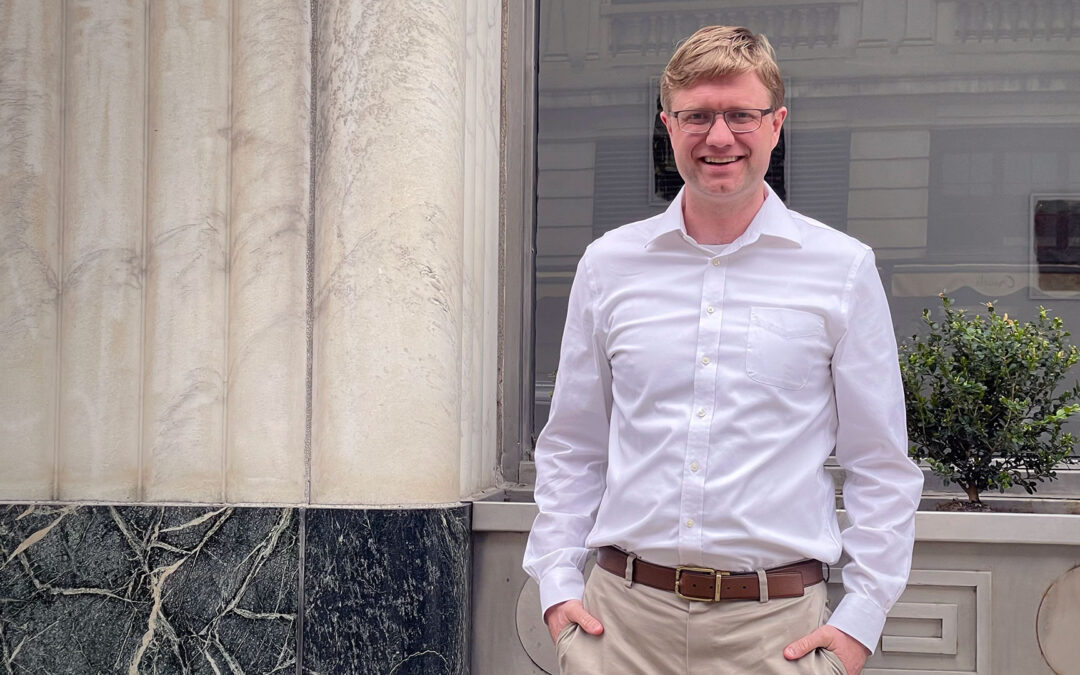
Tim, welcome to the confluence cast presented by Columbus underground. We are a weekly Columbus centric podcast focusing on the civics lifestyle, entertainment and people of our city. I’m your host Tim Fulton, today, the 2026 statewide races are officially underway in Ohio. I sat down with both Democratic candidates for Secretary of State today. You’re hearing the first of those two conversations. Dr Brian Hambly is a leukemia physician at the University of Cincinnati and a political newcomer. He grew up in a small family farm, got pulled into electoral politics through the 2024 anti gerrymandering campaign, and entered the Secretary of State’s race about eight months before his primary opponent. He’s been running a grassroots campaign, no corporate PAC money, over 320 house parties across the state and nearly a million dollars raised. We talked about gerrymandering, voting rights, what he’d do with the non elections side of the office, and why he thinks a political outsider is what this moment calls for. If you haven’t already, I’d encourage you to check out the overview episode where I lay out both candidates and the key differences of this primary. You can get that in your podcast feed from yesterday, and stay tuned for the full conversation with Representative Allison Russo, which is coming tomorrow. You can get more information on what we discussed today in the show notes for this episode at the confluence. Cast.com, enjoy the interview. Sitting down here with Brian Hambly, Democratic candidate for secretary of state of the great state of Ohio. Dr Hambly, how are you? I am
Bryan Hambley 01:58
doing great. Thanks for having me on
Tim Fulton 02:00
Tim, absolutely. Tell us about your background, who you are, what brings you
Bryan Hambley 02:05
to the race? Yeah, I am a leukemia doctor in Cincinnati. I am running for secretary of state because I think elections ought to be honest and fair, and I think we’ve had a secretary of state over the last seven years who have it hasn’t been living up to what Ohio voters deserve.
Tim Fulton 02:19
Tell me about your background, like, what family, why, what made you make the decision to get into this race. So I
Bryan Hambley 02:26
grew up on a small family farm. My parents do farmers markets. My mother is civically minded to the core. She’s the chair of our boys and girls club. Growing up in a low income rural area, my father was on the small local public school for the school board. And so I grew up in a household where every two years you’d be volunteering on some election, some campaign, an issue, and then decided to train it to be a physician. Wanted to go into cancer medicine, because you get to know your patients very, very well. So you have a small number of patients, and you treat them frequently and intensively, because people are often quite sick, especially right after a leukemia diagnosis. Okay, I believe healthcare should be universal, simple and affordable, and the biggest barrier in the state of Ohio to achieve that is gerrymandering that cuts out multiple congressional seats that Democrats should win, half a dozen State Senate seats that we should win, and I think allows the kind of policies like defunding Medicaid for half a million Ohioans that our republican congress people from this state voted for. And so when I look at how could I contribute to a democracy that works better for voters and for my patients. Gerrymandering is an upstream problem for us, and
Tim Fulton 03:47
draw that line explicitly for me, that gerrymander like obviously you’re making the argument that a Democrat should hold this office. Yep, draw that line for is this just, is it that you view this as the best space for you to do it. What I’m going to get to in a minute is, how do you transition sort of that activism and that volunteering to running for statewide office?
Bryan Hambley 04:13
Yeah. So there, let me talk about it in two concrete examples. Okay, one is Cleveland and the Cuyahoga County area, one of the more democratic areas in our country. We should have two Democratic Congress people from the Greater Cleveland area. Max Miller, unfortunately, is a Republican Congress person that voted to cut Medicaid from half a million Ohioans. He is only in power because of gerrymandering. Okay? And then let’s talk about an example in Athens so Athens County, a democratic County in southeastern Ohio where I’m just driving up from today, used to have one democratic state representative, because Athens county is almost exactly the size of a State House District, but Republicans in Columbus didn’t like the state representative that was getting elected for. Athens County, and so the instead of having one Democrat, now we have two Republicans, because Athens County was split into two and then gerrymandered, where a Democrat would find it almost impossible to win. The people who are representing those communities now have voted against public health. They voted against Medicaid and they voted against funding for basic rural hospital needs. And I believe gerrymandering is what causes politicians to be willing to throw their communities under the bus when it comes to their health care policy.
Tim Fulton 05:34
I understand the why you’re doing it. Part help me and help listeners, I suppose, understand the why you are the best person for the role.
Bryan Hambley 05:44
We need one, somebody outside of politics. Okay, we have had a partisan Secretary of State for the last seven years who’s put his own political ambition ahead of everything else. Second, we need somebody who can build big, complex teams. When I joined the University of Cincinnati as a leukemia doctor in 2020 we’re the worst adult leukemia program in the entire country. Okay? It’s a big operation, $250 million a year, 500 plus employees. We rebuilt that program, really from the ground up, and over the last six, six and a half years now, we have taken it from the worst program in the country to now in the top 10% of leukemia programs. That requires motivating people, it requires recruiting people. It requires a long term visit and a turnaround job that is more than just a month or a year at a time. I think that’s a kind of systems based thinking that we have to have in the Secretary of State’s office. How did
Tim Fulton 06:36
you get into politics?
Bryan Hambley 06:38
I’ve been involved in anti poverty, universal health care politics since I was eight years old, and Mom and Dad would go door to door for people, I think the fact that 40% of cancer patients go bankrupt or get into collections from their hospital from their medical bills within three years of a diagnosis, I believe that it is abhorrent that our system does this to people, and so I have knocked doors and supported candidates and policies that I think would move the ball forward for universal health care in whatever way I can you.
Tim Fulton 07:14
You came out running, right? You came out with a pretty big fundraising haul from, I don’t know where I didn’t do any research into like where it came from, or what it was three I think it was a the number I have is 360,000 is that a month or in a quarter?
Bryan Hambley 07:31
That would have been a quarter. We have now raised $928,000
Tim Fulton 07:36
but the first quarter, yeah, that
Bryan Hambley 07:38
sounds about right, the first quarter of 2025, right? Somewhere in 300,000 all of 2025 835,000 and to date, we’re at just over 925 now.
Tim Fulton 07:50
And what do you attribute that sort of that enthusiasm from the beginning one,
Bryan Hambley 07:58
I was heavily involved in the anti gerrymandering campaign in 2024 Okay, and so I had a large network of friends, because I organized nurses and doctors statewide in Ohio against gerrymandering at that time, got it Boy, those folks who spent dozens of hours, many of them knocking doors, collecting signatures, passionately advocating for it, right, they saw our Secretary of State right, dishonest, deliberately confusing ballot language, and that undermined all the work of 10s of 1000s of volunteers around Ohio. And this was the gerrymandering.
Tim Fulton 08:31
That was a 2024,
Bryan Hambley 08:33
gerrymandering amendment. Yeah, they were ready to host house parties, they were ready to donate, they were ready to volunteer. And we’ve harnessed that energy really well. We’ve also done now tonight in Bexley will be our 320/4 house party, or other type of event. So we didn’t just announce in 2025 and sit on our hands. We have been running the kind of grassroots campaigns the Democrats often give lip service to, but don’t actually follow through on. We’ve we’ve been doing it, and we raised money at those events, and that is how we’ve raised more than any down ballot Democrat for this office at this point.
Tim Fulton 09:07
Ever you so we did in just talking to a journalist, David DeWitt from Ohio capital journal, about who is running for governor, specifically, and when we were talking about Amy Acton, we were talking about how the field was obviously kind of cleared for her, or people made the choice not to primary challenge her so that she could keep her powder dry. There’s another person running in this race. Can you talk about sort of the choice you made to run when there was sorry, I do know that you submitted your petition before her to run. We’re the first.
Bryan Hambley 09:43
We started about eight months before, okay, Representative Russo entered.
Tim Fulton 09:47
And so can you talk about sort of that choice for a more established state? Well, hasn’t won statewide, but more established politician, why not clear the way? Her to sort of Hope encourage a Democrat to win.
Bryan Hambley 10:05
Well, I’ll say representative Russo and I couldn’t be more different. People don’t have to spend any time with us to understand that that’s fair. We have two key differences. Okay, Representative Russo voted with Republicans for unconstitutional gerrymandered maps in 2023 Okay, I agree with Nan Whaley and the League of Women Voters that vote was a mistake, and it is, it is disqualifying if you want to be Secretary of State to have supported gerrymandered maps. It was the first argument Republicans used against us in 2024 The second thing is, as you may know, the Secretary of State’s office in Ohio, campaign finance violations are investigated. Now within that office, I do not believe anybody in charge of campaign finance should be taking corporate PAC money. I am the only candidate, Democratic or Republican who has said I will not take any corporate PAC money? I think it is an upstream problem in our democracy, and those are the two distinguishing factors. They’re also, I think, the two most important issues in the race.
Tim Fulton 11:10
Okay, let’s talk about voting a little bit and voting rights. As of taping, they are debating the Save act in Congress. Talk about the work that you would do as Secretary of State to ensure that people had access to the ballot, or maybe more specifically, talk through what things you believe are being done wrong in the state
Bryan Hambley 11:35
of Ohio. Yeah. So first the Save Act, which is currently in the Senate as we speak, it would do a lot of things, but the first and most important thing is it would make women who decided to change their name when they got married produce additional documentation to register to vote. This is not a small issue. The Brennan Center for Justice, it does a lot of research on democracy issues, has said that 20 to 30 million American women do not currently have the documentation that will be required under this Act. That is stunning that we are having this debate about that issue in the United States in 2026 we should not normalize it in Ohio, I’m very worried that if the Save Act doesn’t get through the Senate, that our legislators will try to push something similar in our state. They have already rolled back the grace period for ballots to arrive that were postmarked by election day, but arrive a few days later, because some of the mail service runs a little slow in Ohio, especially if you’re in a rural area, I think we need a Secretary of State who supports voting rights in a way where more Ohioans can vote, not fewer. We unfortunately have one of the lower voter participation rates in the United States. We need a plan to counter that. There are things the secretary of state can do. We should not be kicking people off the voter rolls who just move more frequently. That’s something our Secretary of State has done. Would be a much better way. Is what we used to do, which is we are a member of something called the Eric system. This is where states would share voter registration data. So if you move from one state to another, both states would update their voter rolls. It’s a less partisan way to do it. I think that’s how we should update voter rolls, not with a partisan approach that goes after political opponents and kicks them off the voter rolls at higher rates. We should make it easy to register. I believe in same day voter registration. I believe that automatic voter registration just makes it easier for people, where, if you’re registering at the BMV, you click a box, you know, easier to vote in states that have same day voter registration and automatic voter registration. People like it. About 70% of voters like it because it just cuts the bureaucratic hurdles for Democrats and Republicans. This wouldn’t advantage one party or another.
Tim Fulton 13:57
When did we drop off of Eric?
Bryan Hambley 14:00
2021 I think I had frank Larose pulled us out of it right before he
Tim Fulton 14:04
ran for Senate. I had absolutely
Bryan Hambley 14:07
no idea. Yep, we are no longer a member of it, and that that system was a Democratic and Republican states were in that system, yeah, well, and I
Tim Fulton 14:14
think people listening will say, how is that different from the Justice Department wanting to pull voter rolls from each state, and it’s inherently different, because it’s not administered by the federal government. It’s an independent it’s a federation
Bryan Hambley 14:29
of states. Well, and let me take on an argument I’ve heard Republicans make, is that the government already has your social security number. Why is it a big deal that our Secretary of State submitted the last four of every Ohio voter social the social security administration had your social security number right, not a hyper partisan Department of Justice run by Pam Bondi. We do not and should not have confidence that Pam Bondi is going to be using this for the Ohio’s best voters interest. That is why it was a breach of pride. Privacy. Our Secretary of State did not have to do it, and he shouldn’t have done it. And if I were Secretary of State, I would not have submitted that information to the Justice Department. Do you
Tim Fulton 15:08
think so? You want to get gerrymandering out of the system? And admittedly, there are laws on the books that, sorry, there are state constitutional amendments on the books that make gerrymandering not supposed to happen. There is supposed to be a non partisan panel, and it’s just not happening. What influence do you think that you can have as Secretary of State in addition because you’ll be sitting on that panel, but what other things do you think that you can do to make sure the map is fair?
Bryan Hambley 15:39
Yeah, the number one priority the next Secretary of State should be re running an independent redistricting commission as a constitutional amendment. I think the league of women
Tim Fulton 15:49
voters had this exact additional constitution.
Bryan Hambley 15:51
That’s exactly right. Okay, right now the Constitution bans gerrymandering, but it still relies on the legislature to follow the Constitution, and they have not been doing it. That is why the 2024 amendment was exactly right. The only long term solution to gerrymandering is an independent redistricting commission, where those maps start and end with an independent commission without politicians of either party ever touching the map you
Tim Fulton 16:17
want to take yourself off of it.
Bryan Hambley 16:18
Yes, you know, I am making one of the least common political arguments is that I want to take the most powerful part of the Secretary of State’s office out of my job description.
Tim Fulton 16:28
Okay, Ohio is still Ohio. You will be the basically the boss of the boards of election. The 88 boards of election throughout the state. A whole lot of those are held by Republican office holders. How do you plan to work with those boards of election?
Bryan Hambley 16:48
I’m a poll worker in Warren County, which is more Republican county. And one thing I’ve learned as a poll worker is, you know, you’ve got about half Democrats, half Republicans and people work together. Nobody is trying to cheat. Everybody wants a line to move through quickly and efficiently. You know, at the end of the day, people want to pack up the right way. You know, I have a lot of confidence in our local Board of Elections workers and our poll workers of both parties. I think where our democracy has gone wrong is at the very top, where we have a small number of politicians who have used map drawing and election rules to their own advantage. I think if we change those people, we’ve got plenty of people doing good work at the boards of election around our state.
Tim Fulton 17:31
Okay, what? And I know that you talked about the organizing that you’ve done and you’ve talked about the work that you did at University of Cincinnati being a political newcomer? How would you respond to the criticism that you you don’t understand how this system works. You are literally new to it.
Bryan Hambley 17:52
You know, whoever is our next secretary of state, it will be the first time they are secretary of state. That is fair. Nobody who’s held the office before is running for this. This is a different office than any other in government. This is about vision and leadership. You know, the vision of gerrymandering is wrong. We should never compromise on gerrymandering. The vision that corporate PAC money is an upstream problem in our democracy, and we shouldn’t take it, and even while not taking it, we’ve been able to raise more money than any Democrat ever running for this office. And then it’s about teamwork. How do you build a team to implement that vision? I think I’ve shown that in my past, taken over a really hard position and program in a bad spot in Cincinnati that we can implement and execute a strategy over years and years. That’s what it’s going to take to deliver
Tim Fulton 18:42
talk a little bit. This is not the only thing the Secretary of State does. It’s not just elections. You also register businesses in the state, which is all for profit and nonprofit businesses. You administer wedding licenses. What are one of the least hot
Bryan Hambley 19:01
button parts of the office, well, I
Tim Fulton 19:02
mean, my name is on there, so I’d like to keep my number. What? What vision do you have for that those aspects
Bryan Hambley 19:11
of the office? Yeah, and the small business part. The Secretary of State’s office has about a 60, $70 million a year budget. It has about 150 employees in 2023 the Secretary of State pushed a extra election in August of 2023 that was designed to help him win a primary for the United States Senate. It was a political campaign $20 million out of a budget of 60 to 70 million. He needed an extra appropriation from the legislature to pay for that extra election
Tim Fulton 19:41
remind me what that election was actually
Bryan Hambley 19:43
that was trying to make it harder for citizens to change the constitution in Ohio and raise the bar from 50 to 60% got it instead of spending money and wasting money on an individual’s political ambition, I think we should reduce the small business and new business filing fee. Okay, it’s 90. $9 if we move it to $75 it costs us about $4 million far less than we wasted on a special election. But it’s also a signal to small businesses around Ohio, we want to be efficient. We want to get their their paperwork done, and we want to be one of the most affordable states in the country to start a new business. The second part, there are a lot of civil servants in that office who are doing a really good job, who don’t have anything to do with districting or elections, and they’re just moving the ball forward in their own way. We need to support them. You know when, when Jennifer Bruner, a friend of mine, became our Secretary of State, she brought in a political team of about 15 appointees. About 10% of the office sounds about right. Some Republicans before brought in offices about the same size. When our current Secretary of State came in, he brought in more than 30 political appointees. When you do that, you have to fire a lot more civil servants. When I become Secretary of State, I think we need a much smaller political footprint to set the agenda, and we need to keep civil servants of either political party who are doing their job well. That would be very important for the business services side, where I think we’ve got people who are doing fine work right now.
Tim Fulton 21:17
Okay, what one sentence would you say to people who want to know more about you or want to get involved?
Bryan Hambley 21:26
We Our website is hamblyfor ohio.com, we are active on social media, and we do a lot of house parties and events because we believe in directly communicating and answering hard questions anywhere in the state. If you go to our website and you check the Event tab, you will find an event in your part of Ohio in the next four weeks.
Tim Fulton 21:49
Okay, end every interview with the same two questions, and I’ll expand it. It’s normally, what do you think Central Ohio is doing well, and what do you think it’s not doing so well? But I will allow you because you’re not a resident Columbus site. What do you think Ohio is doing well? And what do you think it’s not doing so well? And you have to leave gerrymandering out of the second part. Fair enough.
Bryan Hambley 22:14
Number one, we have one of the greatest state park systems in the country. I think we need to invest in it. I think we need to, you know, leverage that. But my wife and I have two kids, six and eight year old, we love going to the state parks. We were Deer Creek State Park a few weeks ago, went down to Shawnee state park a year ago. It’s a beautiful system and and Democratic and Republican governors have a lot of credit for developing that system and building upon it over the years, and I love that. Amy Acton has been talking about leveraging that strength and making it even better. One thing that we’re not doing well. Too many Ohioans go bankrupt from medical debt. There was a study that came out three years ago that showed that a woman diagnosed in Ohio with breast cancer has a 40% chance of either being bankrupt from medical debt or in collections from her hospital three years after diagnosis, 40% most of those women had insurance, but they had one of these new high deductible plans used to be a deductible. It’s commonly $500 now I see 3005 $1,000 deductibles all the time, and they didn’t have the money to cover the deductible, especially if it’s every year on an ongoing basis. I think it’s a shame that we’ve allowed that to become common.
Tim Fulton 23:37
Okay, Brian, thanks
Bryan Hambley 23:39
for your time. Thank you so much for having me.
Tim Fulton 23:55 Thank you for listening to the confluence cast presented by Columbus underground. Again, you can get more information on what we discussed today in the show notes for this episode at the confluence cast.com Please rate, subscribe, share this episode of The confluence cast with your friends, family, contacts, enemies, your favorite doctor. If you’re interested in sponsoring the confluence cast, get in touch with us. We can be reached by email at the confluence cast.com our theme music was composed by Benji Robinson. Our producer is Philip Cogley. I’m your host. Tim Fulton, have a great day.