
Podcast: Play in new window | Download
Subscribe: RSS
Tim Fulton 00:00
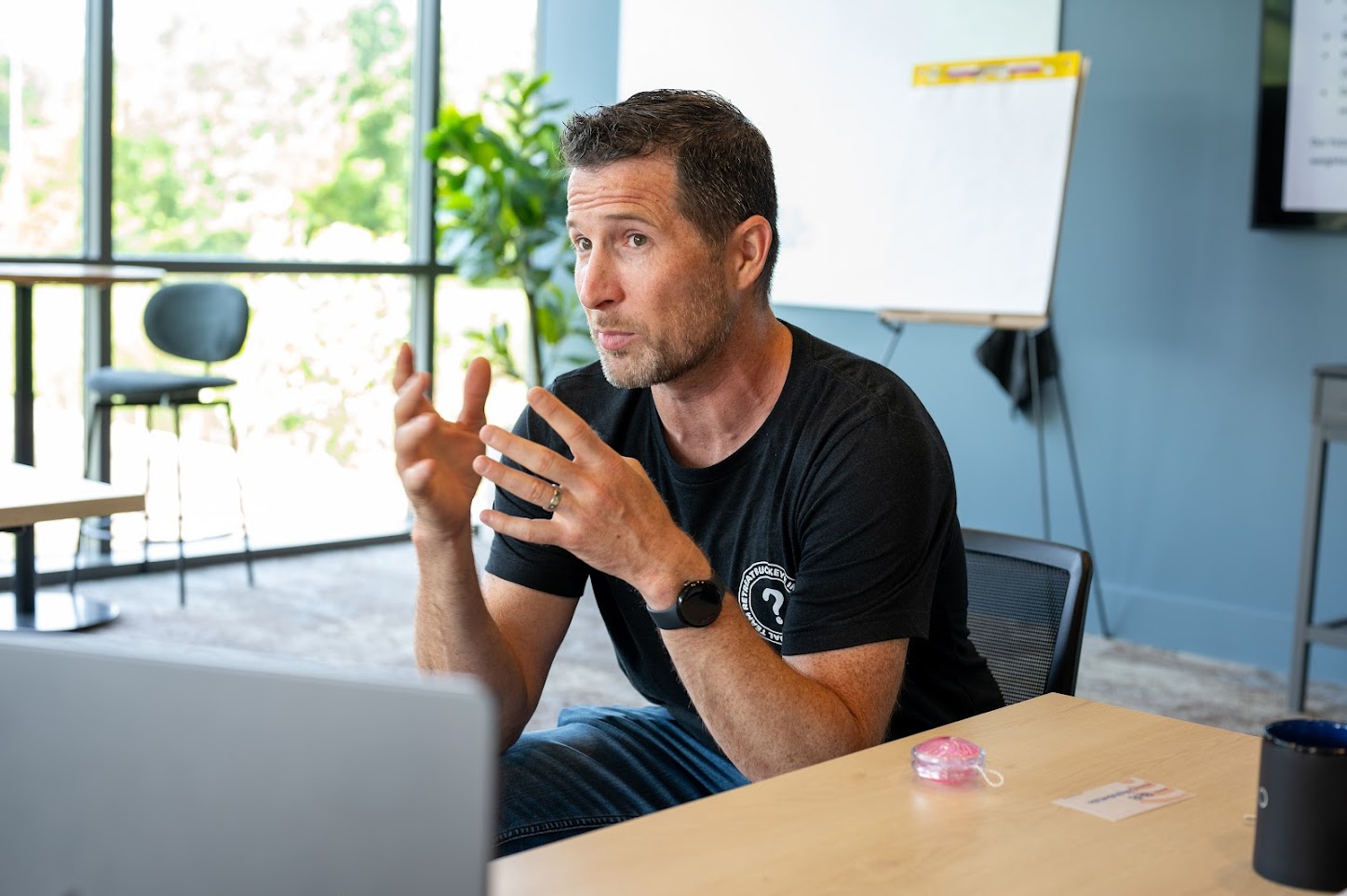
Tim, welcome to the confluence cast presented by Columbus underground. We are a weekly Columbus centric podcast focusing on the civics, lifestyle, entertainment and people of our city. I’m your host. Tim Fulton, this week, when most people picture technology, they picture shiny new tools, big budget builds and teams of engineers working inside massive companies. But for Brad Griffith, founder of Buckeye, innovation, technology is only meaningful when it’s accessible, especially to the people and organizations who traditionally get left behind. For more than 16 years, Brad and his cross functional team have been helping small businesses, nonprofits and local governments across Central Ohio get the same caliber of design, development and strategy usually reserved for enterprise level budgets. In this conversation, Brad and I discuss why equitable access to technology matters. How integrating designers, developers and content strategists into a single collaborative unit changes everything, and why building simple, lovable, complete products often beats building something technically impressive, but practically unusable. You can get more information on what we discussed today in the show notes for this episode at the confluence cast comm. Enjoy the interview. Sitting down here with Brad Griffith, the founder of Buckeye innovation. Brad, how are you doing? Great. How about you? Tim, I’m doing well, tell us about Buckeye innovation.
Brad Griffith 01:42
I’d be happy to Thanks for having me today. Of course, Buckeye innovation is my company that I started 16 years ago, not 16 and a half years ago. We believe that all businesses and organizations deserve access to great technology and design. Okay, and so we are. We’re on a mission to try to make sure that small businesses, minority owned businesses, nonprofits, local governments, organizations that are typically underserved with technology and design have access to the same resources that a big business would Okay, and so we’ve got a team. We built a team. Got 12 individuals based here in central Ohio. I started it in New Albany, but we have team members in five different states. We’ve got some folks here, some in Northeast Ohio and southwest Ohio, and said, great team of designers, developers, content strategists, all mission aligned, and I think doing some really fun work
Tim Fulton 02:32
talk through how you approach a project and how you think it’s a little bit different from other firms. Yeah.
Brad Griffith 02:38
So we have three core values, ingenuity, initiative and collaboration. And we, I would say, one of the ways that we apply those differently, we are very cross functional, design, development and content strategy, all in one team. Those who have worked on a website project, I know you’ve got some experience in the industry building software, and so frequently you have a design firm or a branding firm that does branding. They pass things to a design firm. The design firm passes it to a developer. At some point, one of those is probably the more important thing that you’ve decided in a project is the key thing that you’re going to put your effort into. We try to combine design, development and strategy all into one company so we understand how we’re going to work together. Our designers think about is this feasible? One of my nightmares in development, getting a handoff from a designer is with a pretty big company here in town, where their designers design something, and in the handoff meeting, said to me, literally, I don’t know if any of this is possible, but it looked really good, and it’s fully approved. We need you to implement I said, What right if your designers are thinking about what’s actually possible, and your developers are thinking about the design as well as what’s really going to solve a problem for the nonprofits we work for, or local governments, they’re trying to make a difference in people’s lives. And if we’re thinking about what is the cool tech we can build right instead of whose life is going to be better because of what we build. That’s a problem. So we want to really think about, what are the problems that we’re solving, what are the problems that our clients are solving in the world, and how do we align with that and enable them to do the amazing work that they’re doing? I think a little different approach, with the collaborative, cross functional approach and optimizing around these growing, innovative, mission driven clients.
Tim Fulton 04:22
Can you talk about sort of what technology stacks you’re working with and how how you approach that? Sure, absolutely
Brad Griffith 04:31
the most common one. So we’ve got three, three parts of our business. When we talk about what are the types of projects we might work on, we manage websites, so public facing, marketing informational websites. Columbus library is one of our biggest clients. We’ve been working with for quite a while. We manage all of their websites, City of New Albany, city of Hilliard those are all marketing informational websites. They’ve got events on them. Those are running on WordPress. Okay, and WordPress is the most popular platform for all websites. It’s on the internet. It’s about 40% of all websites. So it’s there’s a lot of power in being the most popular platform. So we’ll use WordPress in our creative pod that does marketing sites. One of our larger clients also uses Shopify for their e commerce site. We like platforms that are popular and they’re well used. I prefer open source, where you’re Shopify, you’re dependent on a single company. Shopify goes down. You’re stuck. You can never move away from it unless you rebuild right? I like WordPress or it’s very portable, but we do some of each of those on the application development side. Again, we want to be very efficient for clients. We want to build something that’s going to give them a lot more impact than building separate iOS and Android apps. We use flutter for our mobile apps. Us to build once. Do you use flutter? We do not know. So flutter a bridge framework, so enables you to build a mobile app once and then just there might be a little bit of code that modify. It gets modified for Android and a little bit for iOS, okay, but it’s largely one code base to deploy to both. So we’ll use that for web applications, which generally give more impact for the dollars. So we’d like to build web apps when we can. We’re using a lot of Laravel, that’s a PHP framework, same languages as WordPress. I’ve been using a lot. I’m obsessed with the potential impact right now of AI driven software development tools. Yeah, on the availability, accessibility, the equitable access to technology. And so a lot of the things that I’m building right now are Node js, they’re react or Vue on the front end, MongoDB on the back end. So we’ve got a few different things going on, largely PHP, Laravel, and then Node js with react in view.
Tim Fulton 06:41
And so let’s say you’re building a content system for city of Hilliard. You’re handing off then, like, Hey, if you need to make content edits, here’s how to do it. You’re doing a certain amount of like, onboarding for here’s how to work in the back end of WordPress, you’re not like, you don’t have a content team. I mean, maybe you do that, do that. They they are taking feedback from the client and saying, Hey, can you update this thing? And you do?
Brad Griffith 07:07
We do so. It depends on what the client needs. Okay. Do have so our three skill sets, design, development and content strategy. Okay. We do have content strategists on our team who will write copy, Edit Copy. We have a few clients who actually send us all of their content updates. That’s not the most efficient way to get it done. Probably we prefer to train clients, yeah. But for some clients, they’re they’re working on other things, and they they need that support. So we’ll do what’s necessary there. But generally, we’re empowering them.
Tim Fulton 07:35
Got it help educate a little bit on the sprint process? Sure? So how,
Brad Griffith 07:42
how you work? Yeah, yeah. So it is so easy, as a developer, for me to build something that’s building all the back end and to say, Listen, Tim, it’s, it’s 90% of the way there. You can’t see it yet because I haven’t built the front end of it. And so the sprint process. It’s an iterative process. We do a sprint, and we demonstrate, here is what has been built, actual working code. Go to this URL, you can see what’s been built that, I think is a different paradigm. Even a lot of developers work on a sprint process, but they’re still they’re doing a sprint, and it takes five, six sprints before they build a front end. You can see, right? We tried to build working functionality every sprint, okay? So that at the end of that sprint, the demo meeting is not, let me show you on my development machine. You know, in theory this, this is what it should do, but I’ve set this demo up perfectly. It’s actually, here’s a URL. You go test it out. Yeah, I’ll walk you through it. I’ll record a video, but I want you to go see how it works. So that’s that’s how our sprint process works. We have a kickoff meeting where we build up a backlog sometimes before the meeting, a backlog of tasks. Here all of the things that we want to do. Let’s prioritize these. Because I don’t want to work on the feature that’s most interesting to me. I want to work on the feature. The first feature I work on is the one that’s most impactful for users, or maybe the riskiest or the most complex, right? What’s going to have the greatest impact for you and your organization, your users? We’ll work on that, and at the end of that sprint, so we’ve prioritized tasks. We know what we’re working on. We work for two weeks, and then at the end of that, we have a demo meeting. We say, Here is what’s been built in those two weeks. And then at that they can demo that they use that functionality for a little bit. And then we kick off the next sprint, prioritizing tasks, building for two weeks, giving a demo.
Tim Fulton 09:30
And I assume that you are setting expectations with a client ahead of time, like this is an eight sprint project.
Brad Griffith 09:37
General, yes. And the idea, though, with demoing and having working functionality, hopefully at any time, if they say, You know what, let’s hold on this right now, we’ve built something that’s useful. Let’s work with that for a little while. We can do more sprints in the future. And so we have a lot of clients that are on an ongoing support agreement with us. Okay, next year, we’re going to do more sprints, but they should be able to use. Use the working functionality at any given time.
Tim Fulton 10:02
How do you sort of set up your cut? Let’s, let’s say confluence, Ohio is a suburb of Columbus, and they need a website. What does? And they put out an RFP, and you submit, hey, here’s what this contract will look like for us to build it. Can you walk me through sort of, I’m specifically interested in, like, what if they say stop, right? Like you just inferred, like you end up doing four sprints. They’ve got a content site. They want to sell merch in the future, but they’re not willing to ready to invest those hours right now, right? What does that contract look like?
Brad Griffith 10:41
Yeah, good question. So we have a state level we can use that example, so on a marketing site or an informational site for a city government. We’ve done a lot of those. We built in 2018 we built 31 micro sites for Delaware County, all their county government sites, agencies, offices, and they now have an accessibility project for them. So when a client comes to us, they typically have what a complete site looks like in their mind, to some extent, and so, and usually with city government, they’re going to set a budget, and they’re going to use that whole budget. So generally, they’re not going to stop in the middle. But what we could do, I think, with apps that might be another that’s a place where it’s more likely someone would stop in the middle. So okay, we’ll talk about the the someone comes to us with city government. They have a bunch of agencies and department city government websites. Typically, the police would be a very popular portion of the website, jobs, careers, events, those are the biggest ones. Usually, yeah, all of, all of our local municipalities, they get a big spike. They’re two spikes. When you think their two spikes are during the year, I imagine it is tax time. Might be hard to guess, not quite, but here, okay, some of them, No, tell me this is typically residents. So July 4, okay, July 3, when there are fireworks, yeah? And October 30 or 31st trick or treat.
Tim Fulton 12:02
So, and these are informational queries, where are the fireworks? Where do I park? And also, when is beggars night?
Brad Griffith 12:09
Yeah, okay. So anyway, it’s good to know when those spikes are good to know what
Tim Fulton 12:13
like Christmas trees. So like December 26 When are they coming to pick up my Christmas tree?
Brad Griffith 12:21
Yeah, that’s, I mean, you’re right. So there are some leaf questions, leaf pickup, Christmas tree. Pickup, pumpkin composting. Yeah, indeed. So anyway, we want to know what are the most impactful things we can do on your site. What’s going to be most important lately, a lot of those city governments would like to move more processes online. Okay, paper forms and paper processes, you have to go into the city hall. Yeah? So we want to figure out what are all the things we’d like to get on the site. What’s going to be most impactful? Let’s plan those up front, the integrations with third party systems. That’s a pretty big one. Yeah, have paying traffic tickets or paying a water bill, or are there things that might be complex that are really important to this. Let’s do those upfront, because there’s some risk involved in those. Okay, so usually what we’ll plan out what needs to be done. What can we do within the budget that’s there? Yeah, so it’s not likely that they’re going to stop in the middle. Okay, with some clients, though, when they’re building an app, I’m sure you heard about MVCs or MVPs, minimally viable products. I like SLC products, simple, lovable, complete products. Have you heard of that? I have not. That’s a good one. So sometimes called a slick product, instead of minimally viable, where it feels minimal. Yeah, there’s a lot of stuff left out here, and I can see where it’s missing a slick product, simple, lovable, complete. I can build something small, and you might use it, that small thing, it works really well. It’s simple. I love using it, and it feels complete. It does one thing, but does it really well, yeah, and that’s what I would rather build, because then someone can take that and run with it, and they can use that simple, lovable, complete product, or they can say, You know what, let’s add another feature, and let’s make sure we do that one really well, and we’ll do another sprint, and we’ll add another feature to it stays this simple, lovable, complete product, instead of trying to build the whole thing all in one fell swoop, build it so that’s where someone could walk away. They could say, great, we’ve got enough to pitch this to our investors, or a nonprofit. Can say, this is awesome. This helps me with my impact metrics. But, you know, there’s a nonprofit who we’re building a dash reporting dashboard for. We can take this to funders. We can show them what we’re doing. It’s going to save us a bunch of time. And I can show funders the metrics, and they can, they’ll donate to help improve this system.
Tim Fulton 14:38
And in the future, I may want it to demonstrate, you know, how many meals we served, or I may want it to demonstrate this other thing, and when I have money, yeah, I will come back to you and you’ll extend it, right, basically, right, right. But if we deliver something that’s working, they can go ahead and use that, yeah, work with it. How sticky do you end up being? Being like, what? So once you build something, what’s your service level agreement with? You know, the city of confluence, Ohio,
Brad Griffith 15:08
yeah, right. I would love to work with Confluence. I don’t know where they are. This doesn’t exist, yeah. So, yeah. How sticky are we generally, very sticky. It depends on do your good work. It’s your like. So there’s, there’s the stickiness, and maybe you can tell me, if I’m hitting the right areas here, the stickiness of, how much do they want to stay with us? Yeah. And then there’s a stickiness from a vendor lock in standpoint. I’m asking about the vendor lock in so that I very much try to avoid. Okay, we will. For some clients, it is a burden for them to have their own hosting account. They don’t want to pay those bills, right? We had a nonprofit client recently whose domain a lot of clients say, No, I’m going to control this portion. Don’t touch this. And their domain expired, and that’s a problem. We had no control, and
Tim Fulton 15:54
because there was no updated credit card in their GoDaddy account, right? Exactly?
Brad Griffith 15:59
Yeah, I was a good idea, so I don’t know. So some clients anyway that want us to manage everything, okay, domain registration, hosting all of that. I prefer if a client owns certain portions of it. If we’re adding domain monitor, we do a lot of monitoring for clients. We did not have domain expiration monitoring for that client, okay, small nonprofit. We added that so that we can now monitor even if we don’t have control of their GoDaddy account, we can detect that’s so my preference is that a client owns their their domain registration. Maybe they own their own hosting account if they’d like to, even if they don’t if we we own and control those things. I want them to feel like they can move away from us at any time. Yeah. And so vendor lock in. I want there to be zero vendor lock in and that. I think the other kind of stickiness, I’d say, they want to keep working with us. I think it drives that, if we are helping keep their system very flexible, they own things. They can take it with them and go somewhere else. Some of our clients do, and that’s okay. Some of them outgrow us, where they in a sense that they can bring their own team members in house. Yeah, we can continue. We handle all the technology for some larger organizations too. We can handle it. But if they’re able to bring someone in house who does most of what they need done, that’s great, and I don’t want to hold them hostage.
Tim Fulton 17:15
And are you being mindful about sort of partitioning off, like if they say, Hey, we’re going to go with a different vendor, could you please hand over the keys? For sure, you’ve set it up in such a way that it is easy to do that.
Brad Griffith 17:29
It is right. We’ll take backups there are. Yeah, we absolutely make that easy for them having their own for instance, we use Cloudflare for some of our DNS. They can create their own Cloudflare account where we are a user on that account, then it’s really easy. You’ve got access to your own account. You can make the change, or we can make the change. We’ll work with your new vendor to make the change. We want that to be a possibility, and because that is, I think it keeps clients with us longer, because they say, you know, I know that you’re not trying to hold us hostage. We have, in fact, two clients right now who are in the process of bringing some services in house or going with a lower cost vendor. But they’re just continuing to work with us because we said, yeah, absolutely we’re not, yeah, here’s everything you need you can move at any time. And they just keep working
Tim Fulton 18:11
with us because they’re like, Oh, we don’t quite know how to do this integration or how to make this work well. Or we, turns out we’re having some trouble keeping, like, our uptime, you know, division,
Brad Griffith 18:23
yeah, they have a big event. They value our support. We’ve got a dedicated support pod. So initially, the creative and the the application development, we have a support pod that supports these websites. And they can just email support at Buckey innovation.com and they get a really quick response. Okay, so the different, different situation or different experience than a lot of people have with developers.
Tim Fulton 18:42
Yeah, talk about some other misconceptions that folks have about building websites, or about how easy it is and how much you know security they may need around their sites, like, what? What are the things that clients sort of say, Oh, I didn’t know that, or I didn’t realize that.
Brad Griffith 19:00
Yeah, good question a couple ways. I might might take that recently, have you played with Claude code or, yeah, a bit Codex? Yeah. So I absolutely love what that can do for building rapid prototypes. I have a couple of projects coming up in the next month. Here. We’ve got a new offering where we will just do a rapid build sprint. We’ll send a questionnaire to a client ahead of time, ask some questions about this app that they need built, and gather some information. I’ll do some advanced planning, come in and for two hours, we will build and launch something and they can it’s a slick product, simple, lovable, complete. It’s up there. It’s in production. They’ve got a URL at the end of that two hours where they can use this app, and then we support it for two weeks beyond that, just to fix bugs that anything that’s broken, and then they can just keep using it. So one of those misconceptions is that comp that custom software is complex and expensive. It has to be, right? It does not have to
Tim Fulton 19:57
be well, three years so three years ago, it did. Right? Three years ago, a year ago, yeah, built anything in two hours, right, right? There’s the infrastructure that you’ve got to set up around it. There’s, you know, the API calls, there’s making sure everything’s secure, there’s, there’s a whole lot, right? And now you can, you basically are employing prompt engineers, right? Like, yeah, vibe coding,
Brad Griffith 20:23
right, right. So, but you have to be careful. So I would like to find a middle ground between vibe coding and what I would call agentic engineering. Okay, you are doing real software engineering work, paying attention to the architecture, paying attention to security and scalability, but you’re also okay using it, giving it a prompt and letting it decide how to architect. And then you review, code review, yeah, so can you build a whole app in two hours that’s secure and scalable? That’s arguable? Yeah, I’m pretty amazed at what we’re able to do in such a short period. And so for a $2,000 rapid build sprint, having some working functionality in your app, I think is very powerful, and you want to be using that to take a nonprofit that needs custom software, they’re there, you know, we’ve, I’ve talked with organizations who use church daycare software to run a food pantry, or it’s just, they’re finding these different systems and piecing them together. So I think there’s a misconception that that as a nonprofit or as a local government with limited resources that you’re stuck with, what can I get off the shelf? Yeah, or if we can amass a bunch of money, then we could have custom software. So that would be one misconception. I also think that there’s those who are aware of vibe coding tools. There’s a misconception that, well, I could just build this, I can just describe it, and then I’ve got this great app that I can launch and that you don’t think about security and scalability. Building those tools, in my experience, I’ve said, build this app where it has customer intake and then give me an admin interface. I want to be able to log in and edit everything, and it just slaps an admin button on the front end of the website with no authentication. But someone who, someone who doesn’t think, Oh, great, okay, so I can click that admin button, I’ll be fine. And they don’t think, Wait, what about security? Right? Or do the API calls return all the information in my database? Or is it only returning the limit? So there are a lot of things that I think we can blend the best of vibe coding, or what can AI build for me, but you need some supervision from an experienced engineer to build something efficiently and
Tim Fulton 22:30
securely, right, right? Talk about your background. How did you get here? Why did you found Buckeye innovation?
Brad Griffith 22:38
So I grew up in Dublin, and I had a job for an educational planning firm there. And I would say I got into that because even my dad was a veterinarian. Ran his practice for 50 years in Dublin. He had a computer support guy who would come and work on his computers at his office and at our house, and my brother followed him around. And I followed my brother around so I learned about computers. My brother actually refused. I don’t know if you would say this today. He refused to teach me. And I said, Brian, will you tell me? Like, how do you do all this? Said, I’m not going to teach you. I go teach yourself. Yeah, which I thought was kind of a jerk move, but it was brilliant, like, it taught me how to learn. Yeah. I figured out how to pursue it myself. Had a great teacher, Kevin burns at Dublin side of high school who didn’t know the first thing about computers, but he was a brilliant mentor and taught us how to go out and find the resources we needed, how to experiment, try something and see if it works and if it doesn’t work, you you adapt, right? And I got a job at an educational planning firm. I built their first website. They I’ve told the story a number of times where they sent me as an intern to go get a bookshelf. And the first time, I just went out and I bought a new bookshelf and brought it back. The second time, I said, Well, why do you need me to get another bookshelves? So we’ve got all these binders on the wall. We’ve printed off all the documentation from our educational facility plans and enrollment projections. We’re out of space that last bookshelf you built, it’s now full, or that you bought, that’s full, right? I said, Well, wait, where are these documents coming from? Well, we print them off from our shared drive. So what? How this was before SharePoint and systems we have today. So I said, How about instead of printing them all and then sending an intern in to go find the binder on the wall, why don’t we build a database, and you can select the client. You could select what type of document, and they’re they’re all indexed. And so I built a web application, and I they had a paper survey that they sent out all around the state of Ohio to school districts. And I said, Well, how about instead of that paper survey, why don’t we build an online survey? This, you know, again, before Survey Monkey or something, would be a bit right? And so we built an online survey, and they were great, great projects for me to work on very early on, and it saved them a ton of time, yeah, and I got to keep using those skills. I went to Ohio State for electrical and computer engineering, got an engineering job out of college, wanted to be more in software, so I moved from the product development firm to JP Morgan Chase, okay, I ran the software development team there for. Couple of years, built a letter writing application that saved them a lot of money, eliminated errors they had call center workers down just grabbing Word documents from a shared drive and typing in loan information, okay, potentially very error prone. So I got great experience in a bank situation with privacy and security, but I’m not made for banks and big businesses. Okay, so I went to work for a small Internet startup with will Schroeder at the helm, and learned a ton and started my business 16 years ago. So that was my path to get here.
Tim Fulton 25:32
Okay, anything else that you would want folks to know about your business and how you work?
Speaker 1 25:40
That’s a good, good question. Do you have minimum job size?
Brad Griffith 25:44
Well, I mean this rapid build sprint, it’s dramatically reduced. I want, I want people to know that great technology and design is accessible to them. And so I’m always asking people, when I meet people, I’ll show them. I showed you my little digital business card app that I built. I’ve got all sorts of things that I’m building these days, driving my wife crazy, and my girls like, they’ll bring something up, and I’ll be thinking, there’s, there’s an app that would help with this. Yeah. So as one more example, my my 11 year old daughter, the other day, she said, you ever go to wits frozen custard? Yeah? So she said to me the other day in the car, Dad, we missed blueberry. They had blueberry on Tuesday, and we missed it. Can we check their flavor calendar on their website? Because I really like the fruit flavors. I wonder if they’ll have a fruit flavor again soon. Yeah, there’s got to be a better way here. So I built an app that browses their website, goes to the home page, goes to Ohio, finds New Albany, gets their flavor calendar image sends it to Gemini to process that uses AI to parse all of the flavors of the day as well as a flavor of the weekend, and puts into a database. And now it’s aI searchable, and even text message searchable. You can send a text message and say, for instance, fall flavors, yeah, and it will understand what you mean by that. And it returns bourbon pecan and pumpkin. Today, I got a text message alert because I had signed up for for alerts. They have eggnog today, and so I get a text message at 10am telling me when that flavor is. So the point of that, if you want to use it, wits, flavors.com, okay, you can use it. The point of that is that a lot of a lot of people in a business or nonprofit might say, I’m using a lot of time on this process, or there’s got to be a better way. I’m really frustrated. We can’t scale. We can’t get larger because of this bottleneck. And I want people to know that you can, you can talk to someone. It’s not going to cost you anything. I will talk to you for free and give you some ideas about how you could use technology and design to better your business or your nonprofit. And so I want people to know that’s what we are here for. We are here to talk about ideas. Anytime you say there’s got to be a better way to do this, or I wonder if this would be possible, or better yet, I know this isn’t possible, and that would help. Let’s talk about that, because I’ll bet we can make it possible. We can figure out a way. So that’s what we do. Solve creative problems. We do it cross functionally, and we do it in a way that really all of our processes are optimized around mission driven. Organizations that may not have access they don’t have equitable access to the same sort of resources. Got it so, yeah, I hope people will reach out to me and we can have some fun brainstorming conversations. Fair.
Tim Fulton 28:25
I end every interview with the same two questions, what do you think Columbus or Central Ohio is doing well, and what do you think we’re not doing so well?
Brad Griffith 28:34
Yeah, I so I cheated a little bit. I have a lot of examples that I’ve heard. Liked Tom krause’s answers. I thought he had some good ones around something that we can improve on, the poverty, the homelessness, the food insecurity. Right now, we’ve got a big issue with snap. I know that’s a federal issue, but there are people in Columbus who are suffering because of that. So we can help supplement what our federal government may not be doing right now, I think there are a lot of great initiatives. The Human Service chamber provides a lot of good resources across the board. We’ve got plenty of organizations that are doing great things. I’m on the board right now for City Year Columbus, they’re working with students in the schools, one of your one of your guests, I can’t remember, talked about education and the importance of education. I think that that is vitally important. We have in Ohio a major problem, not just Columbus specific, but a major problem with inequitable funding. Okay, if you live in a community with expensive homes, you have more funding for your schools. So that’s another big challenge. So bridging some of those equity gaps, I think, is a big challenge our volunteerism. I think Bessa is doing some amazing work in volunteerism. We need more companies on board with that. I’m an entrepreneur’s organization. I need to get our organization on board. We need more people doing volunteer service. So I’d say that’s one of the main things that we could do, helping helping people who don’t have the same opportunities that some of us do. We do a lot of great things. I think our metro parks are the. City of Columbus in particular, is funding a lot of small business initiatives. They I’ve been very impressed, particularly council member Nick Bankston. I think is has funded a lot of great initiatives. Rob Dorans also has done some great initiatives. We worked on a project to help with Record Sealing in Franklin County for those who have something on a criminal record. So I think there’s some great initiatives in Columbus, proper support for female minority owned businesses through the Small Business their accelerate Columbus program. We’re teaching classes at the Columbus Metropolitan Library that are funded by the City of Columbus. I think our library system is amazing. I love the Columbus Metropolitan Library. I was on good day Columbus earlier this week talking about our workshop that we’re doing, depending on when this will air, we’ve got a four part workshop series coming up for the Columbus library. Okay, so many great business and nonprofit resources at the library. So lot of things I think we’re doing well. I do think we collaborate well. Number of guests have talked about that. Some Some say that we’d collaborate well. Some say that there’s room for improvement. Yes, I think we collaborate well, and there’s always room for improvement. Absolutely cross nonprofit and business. Absolutely, Brad, thanks for your time. Absolutely thank you, Tim, appreciate you having
Tim Fulton 31:18
me. Thank you for listening to Confluence cast, presented by Columbus underground. Again, you can get more information on what we discussed today in the show notes for this episode The confluence cast. Com, please rate, subscribe, share this episode of The confluence cast with your friends, family, contacts, enemies, your favorite entrepreneur. If you’re interested in sponsoring the confluence cast, get in touch with us. We can be reached by email at info, at the confluence cast comm. Our theme music was composed by Benji Robinson. Our producer is Philip Cogley. I’m your host. Tim Fulton,
Speaker 2 31:54
have a great week. You. You.