
Podcast: Play in new window | Download
Subscribe: RSS
Tim Fulton 00:00
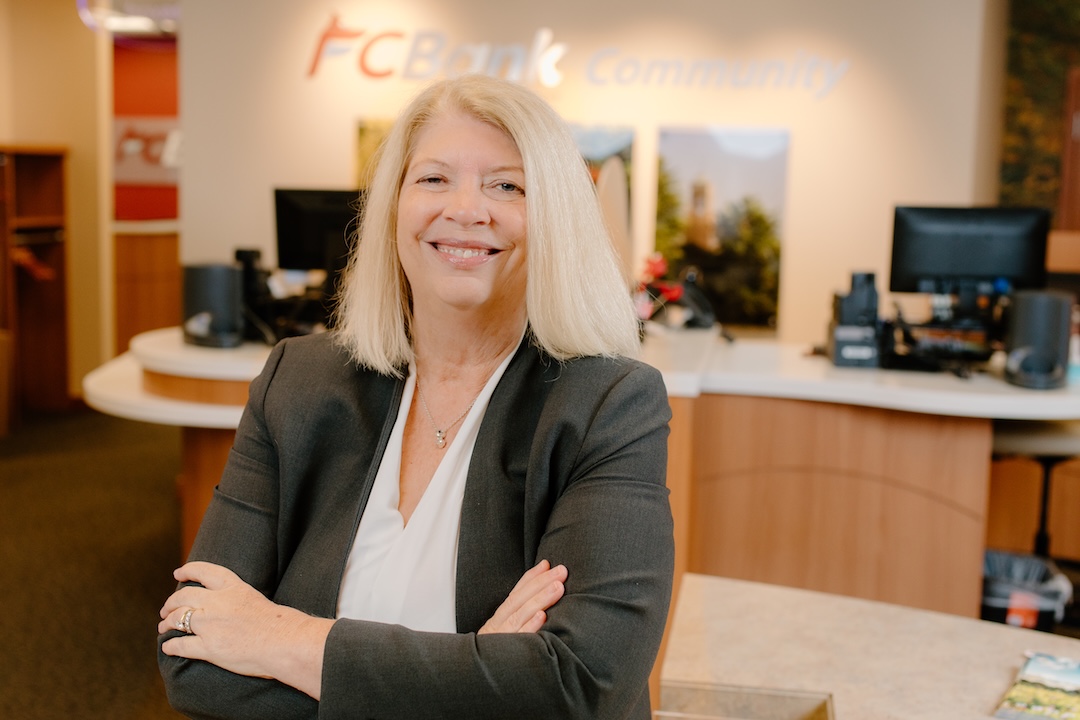
Tim, welcome to the confluence cast presented by Columbus underground. We are a weekly Columbus centric podcast focusing on the civics lifestyle entertainment and people of our city. I’m your host. Tim Fulton, this week, when most people think about banking, they picture massive institutions, rigid rules and transactions that can feel anything but personal. But for Jenny Sanders, president of FC bank, banking is only effective when it’s rooted in relationships, when institutions are visible, accountable and deeply invested in the communities that they serve. Jenny’s path from a small town in Ohio to leading a community bank in central Ohio has been shaped by advocacy brand building and a belief that banks can and should play a meaningful role beyond balance sheets. In this conversation, Jenny and I talk about why relationship banking still matters in an era of mega banks and Neo banks, how FC bank built real community presence and brand recognition in a crowded market, what women in leadership face inside financial services, and why issues like affordable housing, mass transit and regulatory stability will shape the future of Columbus and community banking alike. You can get more information on what we discussed today in the show notes for this episode at the confluence cast.com enjoy the interview. Sitting down here with Jenny Saunders, the president of FC bank, Jenny, how are you? I’m good. How are you? I’m doing well. Tell us about yourself. Tell us about your background, your journey to FC bank.
Jenny Saunders 01:48
Wow, it’s a loaded question, right? Yeah. But so I’m from a small town called St Mary’s, Ohio. So go rough writers. If anybody knows who they are, it’s a very small town, and I was my parents. I always tell people, it’s like Little House on the Prairie, okay, either your parents are merchants or they’re farmers. Mine were merchants, and so my parents and grandparents owned a men’s clothing store, okay? And you know, I’m the first person from my family to graduate from college. Okay, and so my I was going to study law, my just gonna be an attorney. My dad really wanted me to be the first attorney general of the United States. Jamie Reno has that honor, indeed. So. But when I was going to Ohio State, I started working for a bank part time, and ended up falling in love with it. So the unusual thing about me is that I have a poli sci degree, but I’m a banker and so, but yeah, that’s really started out of very small banks, and sometimes I was bought. You know, through acquisitions, it’s much more fun to be the one acquiring than the one to not be to be acquired. Yeah, to be acquired, right? But worked for a lot of different banks, some large, some small, and found my way to FC bank, and so that’s where I am now. It’s a perfect spot for me, I think, to finish my career, it’s a nice community bank that focuses has its roots in commercial banking, which I love and but we get to make an impact in our community, and we do it in the best city in the world, in my mind, or at least in the country, I guess, is what I should say,
Tim Fulton 03:46
that’s fair. That’s fair. Talk a little bit about your sort of experience as so, by the way, your poli sci degree kind of translates directly, in my mind to your leadership at Ohio bankers League. Can you talk a little bit about sort of how you weave that political aspect of things into your work? Yeah.
Jenny Saunders 04:08
So I’m very fortunate to been able to move up in the leadership role through the ohio bankers League, which is the trade association for banks across the state of Ohio, large and small. So we service all of them, and it’s really cool to be able to advocate both here at the state level and at the federal government on the hill, as well as with our regulators for our industry. And it’s not just about banking. It’s also about our employees. It’s about our communities. It’s ensuring that all the things that are out there are helping to make sure that we’re providing the best solutions and services that we can, and a lot of that. Involves legislation. Banking tends to be the political football for for a lot of things, we’re either the we’re either the Savior, or we’re, you know, the gum on the bottom of somebody’s shoe. And a perfect example of that is when the pandemic happened and we had the stimulus package. PPP, people loved us, right? We were building the plane while it was flying. We were really helping provide solutions, getting that money out. But then, you know, something else comes along, and now we’re just all about junk fees. So it’s just one of those things you have to understand about banking, is that there’s going to be real big highs and really big lows from a political perspective. But I will tell you there, there’s something about, you know, being on the hill and going through buildings and, you know, entering a senator’s office and having an opportunity to sit down and talk to him, yeah, policy and, you know, the different things that we’re looking to accomplish. It’s a really cool moment. I had the opportunity in the spring to sit down with JD Vance’s banking policy guy, okay? And we had met JD Vance multiple times when he was a senator, right? And so just to be in that building and being able to sit down and talk to somebody that you know is that close, that gets me juiced. And it doesn’t really matter which, you know, who’s in the White House at the time. We have to work with everybody. And so it’s all about bridge building, forming relationships, and then, you know, really trying to deliver the message of what’s going to really help the industry the best it can.
Tim Fulton 06:43
I read before the interview, you had actually left professional life for just a little bit to help your family. Yeah, you then, I think saw an ad on LinkedIn for
06:56
your LinkedIn really works, but
Tim Fulton 06:59
then you have the job three weeks later, right? Were they new to this market? FC bank?
Jenny Saunders 07:05
So no. So FC bank came into the market in 2013 with an acquisition of farmers citizens, which was headquartered out of bu Cyrus. Okay, three branches here, a loan production office for mortgages. So we’re established here, and I actually took a year off. My daughter is married to Marine, and he was going to be stationed in Afghanistan for a year. And so we decide, my husband’s like, I know you want to be home, and you’re not, you know, super excited about what you’re doing right now, and why don’t you take that time and then figure out kind of what you want to do when you grow up? And so I did that. What I figured out was that I didn’t want to manage, you know, 250 employees anymore in retail, like I was kind of done with that sort of thing. And really kind of wanted to get back to my roots, so I I interviewed for a while, updated my resume, and then summer came, and I’m like, You know what? I’m gonna take the summer off, kind of hang out with my daughter, my grandkids and I have one more at home is getting ready to graduate this year, and my daughter went to apply for housing because her husband was coming home. And they’re like, oh, it’s they’re like, oh, it’s going to be three months. And she was devastated. And they called Two days later, and they’re like, no, if you can be here next week, okay, you can have this house. And I was like, oh. And so, you know, we’re, frankly, getting ready, but at the same time, I’m like, my husband’s going to be expecting me to have a job, looking for one. And so I went out on LinkedIn, and as you said, This job was the first thing in my LinkedIn feed, yeah. And so they were very much at the end of their search. Okay, they had one or two people that they were kind of narrowing down in, so I kind of came in at the end, but I just knew I was the right person for the job. And so I reached out and and fortunately, they felt the same way. Yeah, so
Tim Fulton 09:04
good talk about how you view specifically, and I apologize this is going to be a gendered question. What how you view how women in leadership have to balance these things, and so it’s not only work and family, but also for you, it is the the volunteer work that you’re doing as well. Like, do you have a philosophy behind managing that?
Jenny Saunders 09:33
I don’t think there’s ever a philosophy to do that, right? And I think, you know, people always talk about work life balance. There is no work life balance, right? There’s, I think we’ve all agreed that that’s sort of just a fantasy, right? Sometimes it’s you’re going to do work more, and sometimes you’re going to do family more, and you hope you kind of balance that out, you know, kind of, in the end, I will say, with this job in particular, it has been. Heavy work focused, but I do have the opportunity, you know, if there’s something, if I have a really, really busy week with a lot of things in the morning and a lot of things at night, then maybe the next week, I don’t and I can come in a little later, right? Or I can try to kind of adjust my schedule that way. It’s certainly the Ohio bankers League’s responsibility is certainly added a whole nother layer into that right, because of the travel and the different things that I’ve had to do for that, I think I love my job, and I think that makes it really easy, in some respects, right, to be able to do all of that. And I think when you when you’re really involved with the community, and you really embrace your embrace that, and really involve yourself with that, and you get your entire team into it, it’s so rewarding, and it that doesn’t feel like work, then right? Because you’re you’re doing things, you’re giving back, it helps you, from a growth perspective, because you’re organically growing, because as people see you out there in the community, doing all the things right, then they’re going to be more likely to bank with you. Folks want to bank with someone that’s got the mission right, that that’s aligned to what they’re looking to do, and that’s how we approach all of the communities we’re in. It’s really important to me and to the to the bank, that we’re helping the communities we’re in be successful and thrive, and we have a corporate responsibility to lead the way on that. And I’m especially proud of what I’ve seen happen in Worthington. We’re corporately headquartered there, and so I’m like, when I first got here, I’m like, Well, we’re corporately headquartered here, then we need to be the Bank of Worthington. Like, okay, that needs to be what happens. And when I was looking at it, we weren’t really volunteer. I live in. My kids go to Worthington school. I live just, I live by Polaris mall, so just outside of Worthington. But Worthington is my home. And, you know, I knew the things we needed to be involved with, and we weren’t involved with anything. In fact, what we were kind of doing as a bank was we were just throwing everything up against the wall to see what would stick right. Okay, Columbus is huge. So if you’re going to have an impact doing that, that’s probably not the right strategy, right? And so my mission was, initially, was we got to own Worthington, like Worthington has to feel that we’re their community bank, okay? And so, you know, you get involved with the things that matter, the schools, the concerts on the green, the libraries, all those different things. And then we started doing that in all the other communities that we were into, so that we could be that bank, right? Okay? And when we and then we showed up like everybody came to volunteer, and we, instead of just wearing whatever you wanted, we wore similar T shirts that had FC bank all on the back, right? So people knew who we were, same color, right? All of those things. So, because it’s not just about the money, it’s about showing up and doing the work too, right? And so well.
Tim Fulton 13:01
And it’s about being a brand. Well, about being your brand, corporate personhood,
Jenny Saunders 13:05
if you will, right? And so we really did that. And we went from being like 13th, 14th and market share in Worthington to finishing it like number three, behind Huntington and and Chase, which is crazy, right? When you think about that and and so then, once we had done that, we really tried to pick and choose, okay, where else are we going to be? And then then we did the Columbus Crew, and that was, that was kind of another big branding strategy to get outside of the suburb walls that we were in and get other people to know who we were, and we did it with women initiatives too. There, there really aren’t that many women in the C suite and community banking. Now, we’re very fortunate here in Columbus. We have all sorts of wonderful women leading banks. You’ve got Francie Henry at fifth, third and Mary Ock and Susan at Huntington and so, but from a community bank perspective, we don’t have women in the C suite as much. And so I knew that was a niche that we could do as well. And so we kind of tackled it from that way. And honestly, a lot of people, what I’m most proud of is that people in Columbus know who FC bank is, which is. Now you may not have known about who we were beforehand, but a lot of people do, yeah, and for just having three branches in Columbus, where you’ve got a gazillion competitors, that that’s a big, a big step and a wonderful testament to our marketing and the different things that that we’ve done around that
Tim Fulton 14:40
that’s fair. Tell me you talk a lot about sort of relationships and relationship banking. Do you have a general philosophy there about both how you operate, how the bank should operate, and also how you would recommend a young person in the field of banking? Should I. Operate in terms of relationships, yeah.
Jenny Saunders 15:02
I mean, relationships have to be at the center of everything you do, right? And I remember when we were getting ready to rebrand, so we used to be green and white. Now we’re red and gray, okay? And we have a cardinal in our logo that we didn’t have before. And when we were talking to a marketing firm, the marketing firm that was helping us to rebrand, they went out and did their research and whatnot, and they came back and they were when they were getting ready to present to us, one of the things they said was their research had shown that people do not want a relationship with their bank. And I was like, I had to stop the whole presentation. And I was like, I respectfully disagree with you. Yeah, it’s not that people don’t want a relationship with their bank. It’s the fact that they don’t think they can get one. Okay? I To me, that’s a distinction, right? And so we make it, I make it. We all work at it very hardly at fc, to make the relationship the center of every decision we make, every policy we put in place, you need to be able to see it from everybody’s side, right? How’s it going to impact the customer, how’s it going to impact the employee, how’s it going to impact the community, how’s it going to impact the bank, right? And so if you approach it from that then you’re typically going to make the right decision, and if you understand what your customers and your communities need from a relationship perspective, then and you make it your mission to deliver that, then people are going to understand that you’re really what you say you are. And I think a perfect example of this is we have something called a custom account for our businesses, okay? And when most banks will have 234, different products, right? It’s like when you’re a consumer, you go in and here, here are the couple of suggestions here, checking accounts, right? Have, right? And this is what they come with, right? Well, what happens for everyone that does that, but in particular on businesses, because it’s so expensive to bank, is that you’ll either get an account that doesn’t have everything you need, or you’ll have to go to the next level of account and pay for something that you’ll never, ever use, right? But you need the other things that are at so our custom accounts, we literally sit down with a business customer, regardless of size. And we say, what is it you need the account to do? Right? And then we literally build the account for them that way. So we pick and choose things from almost a buffet. You put it all together, and then you come up with this, right? And that, to me, is relationship building right? Because you’re really listening to the client. Because I can sit here all day and talk all I want, but if I’m not really listening, my people aren’t really listening, and it’s all about us, the bank, and not about the customer.
Tim Fulton 17:54
Yeah, well, and for those that haven’t had to open a business account, that’s everything from how many deposits are you going to be accepting? Is it going to be like semi daily? Do you need to do credit card processing? Are you going to need to process payroll?
Jenny Saunders 18:08
How much cash Are you going to do wires, you know, all of those different things, and all of that has a cost associated to it. And then, depending on how much you’re going to keep in the account, you know, all of those different things. And at the end of the day, what you want is, you want the customer to be able to earn as much on that account as they can. You want it to cost the least amount that it can while it’s still profitable, so that the bank makes a little bit of money, right, so that we can continue every day to go out and be there. So it’s, it’s, it’s really fascinating when you think about it, because it’s like a big puzzle trying to figure out, you know, what’s the best thing and and it’s not just about the deposit account, right? Like, if somebody needs a loan, if somebody needs this, it all kind of goes in together. And if you’re if you’re really looking at it the right way, you can come up with a solution that really helps the business be successful and still helps the bank accomplish its goals as well. And so, you know, that’s really what we try to do on a day to day basis. It’s a lot of fun. I think fair. I mean, everybody thinks banking is fun, but that’s what I do. So I think it’s fun.
Tim Fulton 19:20
This is your niche. The How do you think people perceive community banks versus larger banks?
Jenny Saunders 19:30
So I think every size bank is important, because we need all of them, including credit unions, in the ecosystem, in order for the financial ecosystem to be successful and thrive. So you’re very large banks. You need them because they’re going to do, you know, the International and they’re going to keep all the things moving and you know, and then you have, you know, your credit unions, who are very member focused, right, and mission focused to an extent, and how they. Are going to be able to help that niche Right, right? And then you have community banks, where, I think what makes us well, you have, let me go back. You have larger regional banks, which I also think are really important. We have several of them headquartered here, that kind of help fit that middle of the range. But community banks, especially as time is matriculated on it really are the ones that are reinvesting back into the community. So, you know, I take a deposit from you. I’m either going to put it back out in a loan right into the community we’re at, or I’m going to invest, you know, I’m going to philanthropically support this thing for the community or or I’m going to help the hospital with this, or I’m going to do that. So I think that’s the thing about community banks is much closer to so they they’ve got more capital to reinvest in the community than, say, a credit union, just based on their size. And they’re closer to that than, say, your regional or your very large commercial banks who are looking to make an impact, you know, across a much broader footprint than per se, than a community bank per se. So I think that’s really kind of the differentiator for us. I think because we are smaller, we don’t have nearly as much of a regulatory burden. We’re still very much regulated. But your larger institutions, you know you can’t go off the reservation so much right to go to color in the gray, per se, when you’re trying to deal with a customer, to open an account, or maybe work alone, because economy is scale, you’ve got a jazillion branches, and you can’t afford to do that, right? Because, because one one person kind of going rogue on it is going to create a lot of issues for you down the road, whereas a community bank, just because it’s smaller and tighter. You can allow people to do that because you’re right, they’re able to kind of see the impact of that, and whether somebody you know how that flows. So I, I do think that’s what attracted me back to community banking, was being able to operate a little bit in the gray so that I could meet the needs of the community. And there’s nothing wrong with larger banks. They just because of economy of scale. They just don’t have the ability to do as much of that as, say, a community bank. Now, on the flip side, a large bank is going to have, you know, potentially more tech or be able to do some different things, you know, than what a community bank could do. But I will tell you, community banks are really keeping up with that somewhat, you know, we’re, I mean, if you go to most community banks, they have mobile banking, they have bill pay, they have the ability to do Zelle or something else like that. So we have what’s called etms, which are really itMs, but where you can talk to a person. You can go to an ATM machine, and if you press a certain button, you can actually talk to somebody on the screen, like a teller or universal associate. So a lot of different community banks have those as well. So, you know, we’re, we’re definitely using tech to make it easy to do banking. So yeah, so you need all
Tim Fulton 23:33
and we were talking about it right before, you’re taking advantage of products that are available to you in order to, in order to do that. And so it’s not one clarification, the bigger banks can’t be as flexible. It’s not necessarily a regulatory issue because they have more assets under management. It’s much more just, hey, we we can get this up the chain a little bit faster, because it is only Yeah.
Jenny Saunders 24:01
So I didn’t, yeah, thank you for that clarification. I certainly didn’t want to imply that, yeah,
Tim Fulton 24:05
curious about and maybe we’re getting outside the realm of Columbus, Ohio, because we are. Do you see the regulatory environment right now? Is it getting easier for like Neo banks?
Jenny Saunders 24:20
So that’s definitely a focus, yeah, right now, right?
Tim Fulton 24:24
My definition of Neo bank, and this is just my understanding, is it’s basically, it’s an internet only bank, right? You can set up your account online. You never have to see anybody. They have some amount of KYC, which is, know your customer, and then you have a bank account, right? And they, at least in my experience, offer a whole suite of services that may not be available at a community bank,
Jenny Saunders 24:51
yeah, I think they still offer the same things that a community bank can do, but they definitely have a much farther. Each right? Because, you know, if you Google search, depending on, you know, what you put in your what you’re going to come up with, I think the regulatory environment for Neo banks also, you know, here in Columbus, we have a bank that potentially may come to fruition. That’s looking to just be stable coin, right? And so, still in formation, still trying to figure out, right? And then you have de Nova banks where, you know, in Ohio, we have more de Nova banks than anywhere else in the country, it’s very hard to start a bank. The capital requirements are the same. And what is de novo? I’m sorry, a de Nova is a brand new startup bank. Okay, so a bank that has not been in existence before. So we talked like, like a Delphi would be a de Nova bank, or Fortuna would be a donova bank. Got it. And so we want more banks to form and to come into creation, because you’re seeing so many banks starting to merge, right and consolidate, and that all of that is the normal cycle. But what what happens is every time a bank is bought as merged, you lose competition, and what you don’t want is for it to get so tight that customers don’t have a choice, yeah, and so that’s, I
Tim Fulton 26:31
mean, theoretically a stricter regulatory environment is creating that acquisition structure, right? Because it if there is so much quote, unquote regulatory work to do, that’s head count, right, right? And so the bank can’t be commercially viable.
Jenny Saunders 26:50
It is very expensive and and the regulatory environment over the last couple of administrations has just not been favorable to banks, and
Tim Fulton 27:00
sometimes for good reason,
Jenny Saunders 27:03
sometimes, yeah, and so the current administration is a, you know, the pendulum is swung. And the problem for banks, though, is that we see these big swings one way or the other, depending who is in office. And what we want is, we want fair regulation that ensures that we’re operating safely and that our peers are operating safely, so that our customers and communities assets are safe. And yeah, I mean, that’s what we all want. We don’t want any rogue I mean, what happened a couple years ago, right? Had it had a significant impact on all of us, right? And, and there were some unusual things about those particular institutions and the circumstances around
Tim Fulton 27:56
them. I’m sorry, are we talking about
Jenny Saunders 27:59
I was actually talking about 2022, okay, three, SVB, yes, yeah. That’s sorry, that’s where I gone.
Tim Fulton 28:07
That’s Fulton Valley Bank, yeah, keeping track, right?
Jenny Saunders 28:10
Yeah. There’s those acronyms, yeah. So what you want is, you want some stability, yeah? So whatever the regulation is going to be, let’s stick to it. Let’s agree to it and stick to it. Because what happens is, every time there’s a change in administration, because we’re not codifying any of these regs, they’re just almost at the whim of whoever is in charge, then you have big swings, and the banks are are almost a whiplash so a perfect example of this is that there, there’s been this reg that has been proposed for some time now, and it’s cost banks, just total, I mean, the whole banking industry, millions of dollars to try and get our arms around it, to be able to put the system. It’s a huge change. And now it’s it looks like it’s going away. We’re happy it’s going away. It was very burdensome on the banks to do the reporting that happens a lot banks tend because everybody needs a bank account. When the government wants to track something, when the government wants to keep their pulse on what’s happening, they tend to come to the bank, because everybody banks, right? The problem is, one, we feel intrusive when that happens. But two, we have to build the systems and processes in place to be able to do that reporting. Yeah, and, you know, 911 was a perfect example of that which needed to happen, right? But the systems and places that you had to put in place to be able to track all of that and do all of that, you know, there’s a cost, a financial cost, to that. And if some of some of these become so burdensome from a cost perspective that banks. Your point, then just, you know, they’re like, I’m out. Yeah, and, and then they, you know, they look to sell.
Tim Fulton 30:05
So what pivoting, yeah. What advice would you give to a young person, and maybe specifically a woman who is entering the banking industry and trying to get ahead?
Jenny Saunders 30:18
So what? Here’s what I would say to to anyone, but in particular, a woman, you know, be your own advocate. So I’m I’ve been around for a while, and you know, we’re fortunate now that banking isn’t quite the same as it used to be back then, but it’s still challenging in community banking, in particular, it’s very much, you know, skewed more to men in the C suite than women. A lot of that is because you don’t have a lot of women in commercial banking, and that tends to be what feeds the pipeline that feeds to the C suite for community banking, okay, but if you’re waiting for someone else to tell your story, if you’re sitting back and waiting for someone else to advocate, for you to say what you’re doing, that may never happen. And I know that, you know, throughout my career, I’ve had a couple pivotal moments where, you know, maybe not best opportunities for me or opportunities. I mean, for example, I was in a meeting once where I was really trying to present something, and I was basically, I wasn’t basically, I was told to shut up and do your job okay and so, and that, you know, it’s 2025, years ago. You’re not going to see that now, but, you know, I could have just, I don’t know about that, right? I mean, I could have just, I could have, I mean, I dusted myself off and kept back at it and found a different way to go about, you know, doing what I needed to do. You have to be able to do that. And and women in particular. The reality of it is, is you have to figure out a way to channel your passion, channel your emotions, and there’s a right time to use them, and there’s another time where you just have to suck it up. And, yeah, I would say, be your own advocate. Is you’ve got a champion for yourself, because you don’t know what people are saying in the room when you’re not in there. And you’ll often hear people say, you know, well, find a mentor who, when you’re not in the room, is in there defending you, but you don’t know that that’s happening, and unfortunately, we’re not. Women are not always in the room where decisions are being made. And I often tell people, you know, it’s not just enough to be in the room, though, where decisions are being made. You need to have a seat at that table. And then not only does your voice need to be heard, but your opinion needs to matter and to be respected and be respected, and it’s that for anybody, honestly, not just a woman, but you know, those are the types of things that we have to keep our eye on and and it’s hard sometimes to be your own advocate, right? Because you have self doubt, or you don’t want to be shut down, or maybe it doesn’t go the way you want it to go, but at the end of the day, the only person that’s going to really help you get to the next spot of whatever that is, is you and so surround yourself with people who are going to champion you, who are going to be your cheerleaders. I mean, that doesn’t matter whether you’re a man or a woman, right? I mean, who? Who is your tribe? And you need to have a tribe outside of work that you can bounce everything off of that’s work related, that you shouldn’t be bouncing off at work, right? And then you need to have a tribe at work too, right? But, you know, surround yourself with people who are going to be honest, that are going to tell you how it really is, but who are also going to support you and help dust you off when maybe things don’t go quite the way you want them to.
Tim Fulton 34:24
I had a friend of mine who referred to it as their personal board of directors.
Jenny Saunders 34:29
Oh, I love that. Yeah, yeah, I love that. That is exactly what it should be.
Tim Fulton 34:34
I end every interview with the same two questions, what do you think Central Ohio is doing well, and what do you think it’s not doing so well.
Jenny Saunders 34:43
So I think Central Ohio is just fabulous. And how we care about people, how we are collaborative. I mean, you hear about it all the time, right? The. Columbus way, right? People here are not afraid to reach out to somebody else, even in the same industry, or maybe something completely opposite, and say, Hey, what do you think about this? Or do you want to work on this together? Or, and, you know, you don’t see that everywhere, right? So I think the collaborativeness that we have here, the the common drive to get us to wherever we want to go next, the general caring we have for everyone that lives here. I think that makes us very special. And the fact that we, you know, have the best national championship football team in the entire world. Sitting here doesn’t hurt. Oh, but sorry Ohio State graduate, so gotta throw that and a little obsessed with football, what I would say we don’t there are two things that has me very concerned about Columbus, and there are two things that I’m sure you’ve heard multiple times one affordable housing. I mean, we have a housing issue here, and we all know it. We just don’t, can’t quite seem to figure out how to crack that nut right. The other thing is mass transit, and I just don’t, I was just talking to someone about this at a conference earlier this week, I just don’t know how we fix that. You know, everybody here drives a car. That’s why we have so much. You know, the traffic issues we have, but not everybody has access to a car. COTA is trying its best, but, you know, we need much better mass transit to be able to move people around and get people to where they need to go. And I think, for being the 13th or 14th, depending on which survey you look at it largest city in the country, our affordable housing and our mass transit are things that are going to hold us back until we can figure that out and and it’s something I talk to people about all the time, so many amazing people and really bright people trying to put their minds to trying to figure it out. Going back to what I said was so amazing about Columbus, but it seems to be something that we’re just not getting a lot of traction on
Tim Fulton 37:23
that’s fair. Jenny, thanks for your time. Sure. I had really enjoyed
Jenny Saunders 37:27
our conversation. Thank you so much, absolutely. Thank
Tim Fulton 37:40 you for listening to the confluence cast presented by Columbus underground. Again. You can get more information on what we discussed today in the show notes for this episode at the confluence cast com. Please rate, subscribe, share this episode of The confluence cast with your friends, family, contacts, enemies, your favorite banker, if you’re interested in sponsoring the confluence cast, get in touch with us. We can be reached by email at info at the confluence cast.com, our theme music was composed by Benji Robinson. Our producer is Philip Cogley. I’m your host. Tim Fulton, Have a great week.