
← All episodes

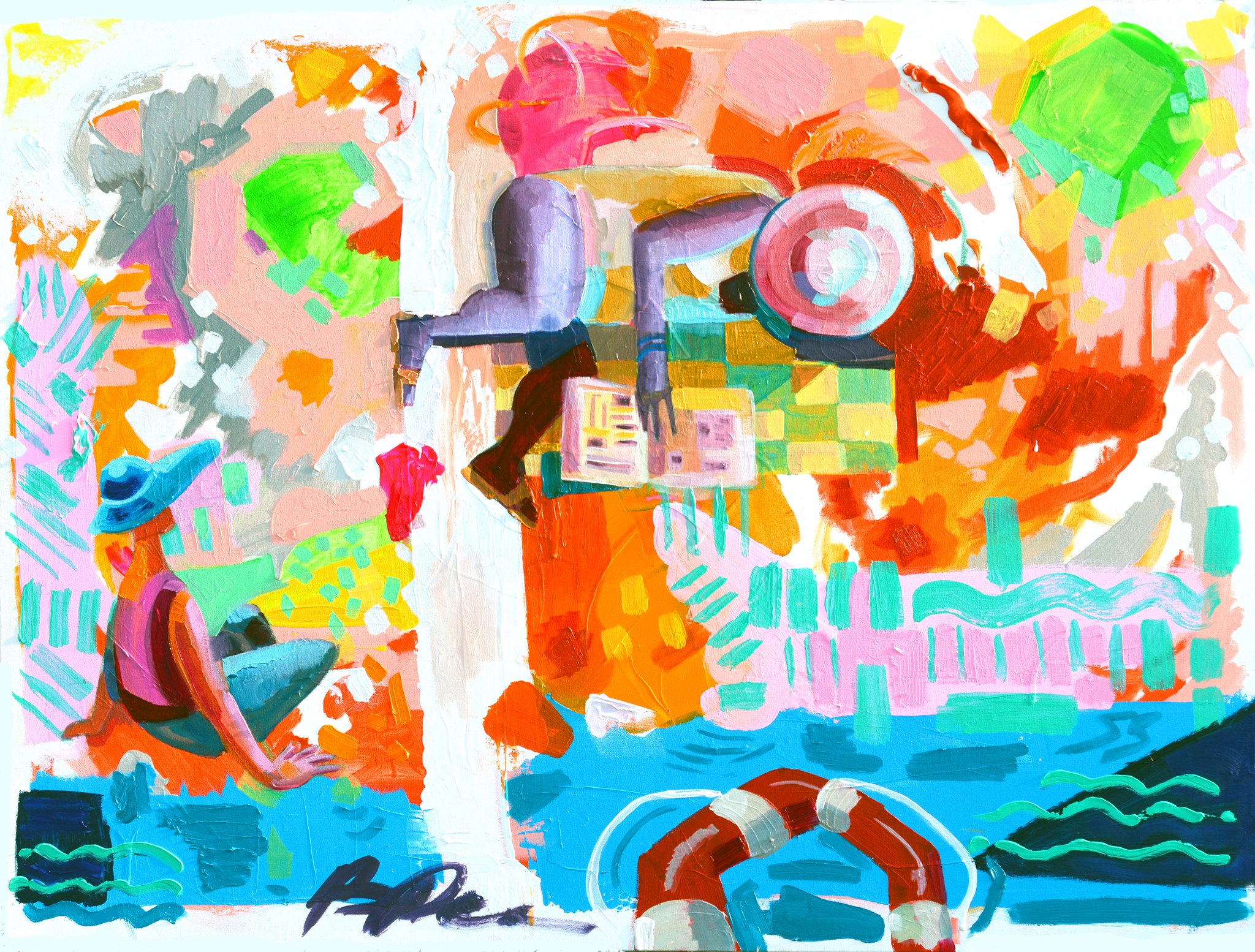
Artist Bryan Christopher Moss

Sep 20, 2016 · 48 min

How can we make Columbus a true hub for visual art? We tackle that and more with artist and educator Bryan Christopher Moss in this week’s episode, recorded live at Independents’ Day.

Shownotes:

Big thank you to our sponsor this week, Julep. Get tickets to their sneak preview party here

Read the transcript

Ladies and gentlemen, welcome to the Confluence Cast, presented by Columbus Underground. We are a weekly Columbus-centric podcast focused on the civics, lifestyle, entertainment, and people of our city. I am your host, Tim Fulton. This week, we recorded live at this past weekend's Independence Day Festival. I sat down with the artist Brian Christopher Moss to discuss his background, how he works, why he calls himself the greatest living artist, how we can make Columbus a hub for visual art, and also discuss the new show that's up at the Wexner Center for the Arts. You can get more information on Brian and other things we discuss in the show notes for this episode at theconfluencecast.com. Today's episode is sponsored by Julep, opening in the Short North. You can check out the newly renovated space and bar, uh, coming up this Friday, September 23rd, and sample their craft kitchen menu. Tickets are available for their sneak peak event, again, this Friday, September 23rd, right now at columbusunderground.com. If you are interested in sponsoring the Confluence Cast, get in touch with us at info@theconfluencecast.com. Enjoy the interview. Sitting down here with Brian Christopher Moss, educator, artist, muralist, Columbus native. We are recording live here at Independence Day 2016, stuck into a corner of a parking lot with a large map- ... that denotes the donk sightings, uh, in and around Columbus, Ohio. Everyone is sort of looking at us. We, we are not sort of amplified to the crowd, so we just look like, uh, sports commentators that no one can hear sort of talking about what's going on. So if at some point we stop and say, "Oh my gosh, look at that crazy man," it's because we're recording live at Independence Day. Brian, how are you? Doing well. Um, what should we do if we get a inquisitive donker? Someone, someone- Will we ignore them?

Someone asking about donks? Yeah. Uh, no, we can stop. I can edit that out. Uh, it's fine. That's okay. I think we should ignore them or chastise them for asking why we're on a podcast.

Right. We should say, "Look at the sign. We are podcasting right now." And we should ask for their ID and dox them. Right. Brian, you're a Columbus guy. Can you first of all just give a little background? Most I, I imagine don't know your full backstory. Uh, where did you grow up? I grew up on the south side of Columbus, um, where based upon the donks map, uh, there's a lot of donks down there.

Uh-huh. So yeah, grew up on the south side of Columbus. Uh, born in '81, 1981. And, um, so yeah, born in, uh, south side of Columbus, Ohio. Columbus City Schools. Yeah, Columbus City Schools. Um, if you're familiar with, uh, Stewart Elementary, it's in German Village. I lived south of there. So grew up in an impoverished environment. Uh, this is the '80s, so stereotypical what things you would see on TV, which consist of like, you know, dilapidated homes, uh, drugs, infested communities, those kinda things. Um, I had a solid family, you know, mom, dad. I got four sisters, a half-brother.

Was the, the, the, the drug, and I imagine what comes along with it, the crime, was that something that you were exposed to a lot? Exposed to visually, but wasn't affected by just because it's, I'm a kid. And none- my family didn't involve themselves in that, so. Okay. They had a, a healthy ed- education. My father has his master's in English. Um, it's just due to hard times, you know, kinda thing.

Okay. Now what, what did your father do? Um, he was at that point a mechanic. Um, but when he graduated school, he was a teacher, an English professor, I think at the Indian- at Indiana University, whatever their s- state school is. Okay. Uh, and your mother? Uh, just a house- you know, housewife kinda thing.

Okay. You know, she had part-time jobs here and there. Brothers and sisters? Mm-hmm. Yep. I got four of a- four sisters, so I'm the middle, and then I have a half-brother, um, from my mother's previous marriage. So he's white, which is interesting because I'm biracial.

It should be noted that you are biracial. Yeah. Uh, you can't see that. Right.

And so how did you get into visual art? Actually, that's a pretty... That's a good question, as they would say. When I started kindergarten, uh, Stewart Elementary, across the street from there is a s- is a recreation center called Schiller Park. So my mother started sending us over there. My sisters, I would s- actually, my siblings, they were already going there. And then as part of the process when I went to kindergarten, we also, I went al- also went over there with my sisters. So I, um- And this is a standard rec center. It has- Yeah, nothing special

... gym- gymnasium- Yeah, so I was- ... activity rooms. Yeah, so at this point it's just doing gymnastics and art. Um, but by first grade I was fully committed to doing art, so I was just doing art class, art class, art class.

By first grade? Oh, yeah. Okay. Mm-hmm. I knew exactly what I was gonna do when I got older. Um, and so I would go after school, so that's around 3:15, 3:30, and I would stay there till, like, 6:00, 6:30. So three hours, three and a half hours a day, times five, times, uh, first grade or kindergarten, transitioning into fifth grade. So that's a lot of art.

Absolutely. Mm-hmm. Uh, and so talk about sort of y- transitioning that into y- you know, what did you do post-high school, and sort of where- Mm-hmm

... I, I know the backstory, so I'm sort of teeing it up for you. Right. What was your sorta situation once you were, uh, you know, an adult or, you know, a teenager in high school? Well, it was pretty interesting because it was pretty dynamic. Once I got out of high school there was an option, you know, going to CCAD. And initially, when I enrolled, um, this is through the transition of ha- my parents having an eviction on their home.

Okay. So I was essentially homeless. Okay. I, I was couch surfing, living on my sister's couch, enrolled in school, and then that's when I found out it wasn't really for me. You know, it was like, not that this-

How do you mean? How do you mean that it wasn't really for you? This, this, it wasn't necessarily that CCAD wasn't, um, like I couldn't take anything away from it. It was more the socialization. So I felt like a adult amongst kids, and that's not a knock towards, you know, people that come from the country or from the suburbs. But that being said, it was pretty obvious that this was a, um, I had a lot more experience than they had. Are you saying that you were already a working artist at that point? Right.

Okay. So, yeah, so what happened is that once I realized that that wasn't the direction I was gonna go, I was already doing commercial work by that point. So what happened is that somebody saw my work out from LA, and then that's when I started getting contracts to do storyboards for pilots. Um, that's where it started. So I started, um, making a pretty good income at it probably by, I'd say, 20, you know. Okay. And you had not, uh, did you enroll in CCAD immediately after high school? Um, it was like a year. There was like a year gap there.

You had a gap year. Yeah. Mm-hmm. Where- That's what the young white girls say. Yeah. Is that, is that what they call it?

"I took a gap year and I traveled." Yeah. Yeah, my traveling was trying to find a place to live. So you arrived at CCAD sort of, let, I'm gonna put words in your mouth. No, that's fine.

You sort, you know, disco- uh, I have had friends who were working artists who, who had been told multiple times that they sort of needed to professionalize their education background if they ever wanted to be something more than an outsider artist. And so they go to CCAD, and they discover that they're forced to sort of take this survey of classes, which is not bad. I think if you're- Right ... uh, in visual arts, certainly you need to have at least an understanding and an appreciation of, of at least the primary visual arts. Mm-hmm.

I mean, the foundational. The foundation. Yeah, the foundation. But that's a lot, one, of time. That's an entire year- Mm-hmm

... of your schooling. And two, it's not cheap. Um, even though, uh, you know, student loans may cover your education, they may even cover your housing, for someone who is transitioning from being essentially homeless, uh, which, you know, you can, y- y- you can put a nice coat of paint on it and say that you were couch surfing, but you were homeless. Right. Mm-hmm. Um, coming from that environment and being expected to purchase watercolors. Right.

Purchase, uh, nice, uh, notebooks. Yeah. Purchase everything else that you have to purchase in order to pursue, uh, visual arts that frankly you're not very interested in. Purchasing, you know, that big ass block of clay. Right.

That sort of thing. Well, yeah, it's funny 'cause there's this very specific story to that. I remember when they said, "Oh, you have to get the foundation kit." And I'm like, "Okay." And you see the bill for it, and- How, how much is the foundation kit? 1,200.

Okay. And I was like, "Well, I don't have $1,200," obviously. So I go to the, I think it was like the financial office or something like that. And you know, they're dealing with, like, hundreds of kids like me, like blind and naive and- Right ... you know. And so they're like, I'm like, "I can't buy this kit. How do I do this?" And they gave you, like, a voucher for, like, it was, like, half of it or something like that.

Okay. So that was, like, all the money I owed CCAD 'cause I, like, left, got the voucher. And I had a credit card at the time. That's how I was, like, living. So you got the kit. Yeah, I bought the kit. Um, and then I, right after that, I'm like, okay, if I, if it was a struggle for me to get this kit and to, like, do this, and it was, like, sh- stressing me out, and I was like, I have no attachment or association, or, like, there was no kinship with the fellow students. I'm like, "No, this is, like, the worst for de- worst decision for me ever."

Right. So I said, "Okay, uh, let's rethink this." Right. Maybe this isn't the path that I wanna be going down. Exactly.

And so talk about sort of your professional life since then. You, you, you continued to do, uh, commission work- Mm-hmm ... for primarily storyboards. Yeah. That was where the, the big, where the main money was coming in. So I was doing storyboards, and they would submit the stuff to, like, um, uh, all the networks. You know, they had a inroad 'cause they were working with agents. So I was just basically a subcontractor.

Okay. Um, so it's actually a really cool thing because, um, working in that position, um, even though you're not getting the credit that you would if something got made, you're still part of a team that values you. Right. So, you know, there's nothing wrong with that.

And you're working remotely. Yeah. I'm spending LA money in Columbus, so Nice ... I was able to live, right?

Right. So then that's when I realized, like, this whole, like, idea of, like, going to school to be an artist, but, like I said, I was doing, I'm the exception. I was doing this since, like, six, seven. Um, so I kind of had a different s- rule set or skill set that applied. That being said, um, the other kind of work I was doing at the time was for albums, promotions for theaters, um, basically anything, um, commercial 'cause that was when I was more illustr- illustration heavy. And so for, for those that are not aware, for those that sort of, like, view, like, drawings and, and, and graphic design and stuff as sort of, like, oh, that's art- Right

... there's a big difference between, uh, visual art/fine art and commercial art. Mm-hmm. Little A and big A. Okay. That, that's an excellent way to put it. So what, what, what is the difference? Okay.

For those that aren't aware. Okay. So j- we'll just- We're, we're bringing it down to basics here. Okay. Cool. No worries. Yeah. So it's, like, little A, 'cause it's like, I respect them both as big As. Let's get that clear.

Right. Like, this isn't my view. I'm speaking completely, like, academic and, like, collective decision, uh, definitions, you know? Okay. So little A would be, like, your tattoo artists- Your comic book artist. Comic book artists are in this transition of where it's starting to be respected by academia. Right. But still, it's still a little A.

Well, and especially in Columbus, given the cartoon research library. Right. It's a nice vehicle. Yeah. Um, your, like, uh, Kinko-style print guys. You know, um, your graffiti guys. That's all little A. Big A is, you know, museums, galleries, and it's very specific galleries, not even... We're talking blue chip galleries, you know? So we're talking galleries that have world, worldwide reps.

Right, well, galleries that have representation at art fairs like Art Basel and- Exactly. Exactly ... uh, not necessarily. Some of the galleries here maybe. Yeah, I mean-

But the, the, the, the big A art in Columbus is the stuff that frankly, a lot of times isn't being produced in Columbus, it's, uh, but, but the work that you would see at places like the Wexner Center or the Museum of Art. Right, exactly. And like, your, your, um, region- Or some of the, the, the public art that we have. Right, yeah. Yeah, completely. And it's cool because, like, things are opening up now, but yeah. Th- so based upon these definitions and ideas, you know, your... It's specifically your blue chip galleries is when you transition to your big A.

Okay. Museums. Um, I think we'll be... There's a rumor we'll be having a blue chip gallery here soon. I don't wanna speak too much about that. Okay. But there's a rumor about that.

Like a satellite location? Or... Uh, sort of. Actually, it'll be based out of here, um, and based upon someone who has a really healthy collection. We'll just say that. Give it, given that, we're gonna take a quick break, uh, and get a word from our sponsor. Today's episode is sponsored by Julep, opening in the Short North. You can check out this new bar in a newly renovated space this Friday, September 23rd, and sample their craft kitchen menu. Tickets are available for this sneak peek right now at columbusunderground.com. If you're interested in sponsoring the Confluence Cast, get in touch with us at info@theconfluencecast.com. Back to the interview. We're back with Brian Christopher Moss, uh, visual artist, muralist, educator. Um, Brian, so we, we have talked through sort of your, your childhood, both early and late. Uh-huh.

Uh, and the difference between, uh, commercial art and fine art, what you refer to as the, the big A and little A. Um, talk about sort of the work that you've done in adulthood and sort of how you view your s- your identity as an artist in Columbus. Okay. Like you've worked as a docent at the Columbus Museum of Art. Yeah.

Uh- I'm doing that now. Okay. And I also currently am, um, serving a residency at Wexner Center-

Okay ... through the Pages program. Okay. Talk about the Pages program for those that aren't familiar. Okay. Yeah, the Pages program is a literacy based program. Uh, Dion Custer, uh, it's her program. She's been... This will be the 11th year. Um, and what it is, it's an outreach program for literacy, so the schools. And so Dion picks, selects 10 schools through application, and then I, as the artist, and then there's a few other ones, there's a writer and then there's a poet. We'll go out into the community, into these schools, and then create dialogues and narratives based upon our disciplines. So in this case, uh, Wexner has an exhibition, Black Mountain College.

Which we will talk about in a bit. Mm-hmm. And that is what I'll be talking to the students about, and then we'll be, I'll be facilitating activities. Well, actually, art- And so- ... not activities.

Right There's a big difference. And so what you, what, what happens is they bring in, uh, these artists/educators who, uh, sort of present ideas to students, and then have the students respond through writing. Mm-hmm.

Whether that be talking about how the visual art makes them feel, or I imagine with the poet it's a lot more direct, of doing a sort of, you know, uh, poetry, uh, exercise. Um, and, uh, it's a fantastic program. They actually produce, uh, a compendium of the students' works, uh, that I think is available somewhere. You can- Uh, if, if it- You have access to a site

... if it is, uh, it'll be linked in the show notes for this episode. Uh, talk about sort of, you know, the, the, the choices that you've made in order to remain a working artist in Columbus. The biggest thing is probably not to join a group. Okay. Um, and I don't say that in a negative sense, because there's a lot of groups here.

So w- Right? I don't want them to- And, and f- ... hang me.

Right. Well, for those that aren't aware, what are some of the groups that you... Like 400 West Rich. Yeah, which is where we're at now. Uh, which is where- Rough

... where we're at r- right this moment. Which isn't necessarily a group, but it is- Yeah, it's like a collective ... but it is an art, a, a, a- Is that fair to say?

Well, it's a building that houses a whole bunch of artist studios. Right. Um, so not necessarily a collective. Mm.

But, uh, Couchfire Collective, which used to be housed at Junction View Studios, is certainly considered a group. Right. Um, uh, the Ohio Art League is certainly considered a group. Mm-hmm.

Um, w- why, why do you say that, that you've decided to not align yourself with one individual group? Uh, because what happens is, like, it's, it's a great thing to be part of a community, which I feel I'm a part of. What happens is that you have a couple things. You have something called group think. Okay. Which, as an artist and an, an, an individual, is probably the worst thing for you. And the reason for that is because if we're in a room of 10 people and we collectively agree to do a show based upon something, it's always gonna be a compromise.

Okay. So when there's no direct leader, um, then that's when it becomes... And then what if you don't agree with the leader, right? Okay. So that's where that becomes toxic, dealing with group think. Then furthermore, um, what happens is that there's less vulnerability, there's protection, and so you're not thinking-

You're not being as daring as you could be. Right. Yeah, you definitely have to ... It's like being an artist is kind of like having your back to the wall constantly, and there's only one way out, you know? Um, it's like your last fight always. And so you have to be able to be nimble, fluid, and being able to adapt to situations quickly. So if I have a location to go to constantly where I'm being validated anywhere from two people to 100 people, then that's potentially a problem- Okay ... as an artist.

Okay. One thing that you've said to me in the past has sort of been, uh, um, "Know your value- Mm-hmm ... and value your agency." Yeah.

I think that that totally speak, I think the valuing your agency, meaning- Mm-hmm ... independence- Right

... speaks to not joining a group and sort of being defined by, "I'm Brian Christopher Moss from XYZ group." Um, talk about sort of, uh, uh, knowing your value though. With that aspect, um, because a lot of times people undersell themselves, so we can speak literally first. Okay. Um, and the thing about that is that you have to be smart about pricing your art, showing your art, these kind of things. Um, so a good example of this was that there was a cat show, um-

Literally meow, cat. Mm-hmm. Okay. Here at 400. Um, it raised a lot of money. It was really cool, very productive for the community. Um, I'm kind of priced out of that market, but I was invited by Angela Jan to show there.

Okay. And she's a dear friend of mine, so I'm like, "Sure, of course. Cool." Um, but what I have to do then at that point is readjust, so I have to draw smaller. So it's literally like we're speaking literally about value now, like- Right ... cost, okay?

Well, and square- So- ... square inches of art. Yes, yes.

Okay. So that is, I'm being very literal right now. Now let's jump to, like, the symbolic, right? Knowing your value is like having a confidence and understanding that you're not gonna do work for free, one. Right. Um, and two, to value what you do. So you have to understand that what you're creating is unique to you. And it's corny, right? Because it's like, "Oh, yes, we're all unique." Star Dust, Star of Snowflakes.

We're, we're all pretty snowflakes and/or butterflies. Yeah. So, but it's actually true. So what you offer and what you bring to the table is very specific. So and then you have to ... And what I mean by value also is you have to produce good work. You have to meet the public where they're at. So you just can't produce work that's underwhelming or not interesting and expect the public to, like, respect you. So- Like, it doesn't work. That, just because you can make art doesn't mean that you should have value.

I'm always interested in sort of the nuts and the bolts and the economics of things. Right. So how do you, do you sort of price your work for, uh, you know, this is what, this is what the market/economy will bear, w- or do you price it in such a way that you're like, "Okay, for, if I work a 40-hour week that is simply producing work, or if I work a, a, a week where I'm doing 20 hours of actually producing work, I'm doing 10 hours of marketing, and then 10 hours of, like, you know, stretching canvases and, like, putting the finishing touches on things," which is a, uh, also production, but it's not generating art. Right.

Do you price your work in such a way of like, "Okay, I know I can make three works with that amount of time, and this is how much I need to live"? Right. Um, I used to- And then, of course, there's the, the fees on top of it. It's like, you know, what you're giving to a show, uh, what you're giving to a gallery. Is that how you price it, or is it simply how much could I get? Right. No, I used to price it that way, um, by the hour. You know, like a-

Okay ... my time, you know? Um, but if you're selling art, you know, let's go back to that blue chip gallery. Yeah. If you already have a gallery that's representing you and everything's gonna be sold out, that's fine and dandy, but when you're only selling a piece every week or couple, you know, and it fluctuates, you can't-

Now are, are you represented? No, I do not have anyone representing me. I would love to. Okay. But my, but the thing is-

My name, my name's Tim Fulton. It's nice to meet you. Pleasure to meet you too. But the, the issue, just as a side note real quick, uh, with galleries and stuff like that, usually I prefer to be invited just because, like, you don't wanna go putting yourself in the position, going back to valuing yourself, your agency. Right. It's like-

Right ... if you're begging, begging, begging, then you give that person power, the gallery, and the gallery may not have your best interests or they may not promote you, and you might be in a contract to where you're stuck. Okay. So that's a very bad position to be in. But it works out for a lot of people, um, very well based upon what the direction they're going-

Well, I think- ... because they're not multiple disciplinary. Right. Well, and you'd like to assume that a gallery wouldn't sign you up, lock you into a contract, and then not be working for your best interest, but that may very well happen. Oh, yeah. No, no, it happens all the time because, um, like, the, the reality of, like, the art market is that, um, in any city there's a, a glass ceiling of, of co- of what somebody will pay.

Right. Okay? And that is what I learned really quickly. So- So give me an example of that. Okay. So I'm priced out. I have to paint smaller now.

Okay. So when I paint larger, it gets ... And we're not talking really large. We're talking three to four feet. Okay. It, that turns into, like, a 6 to $8,000 painting.

Okay. Um, there's n- there's no market independently for myself that supports that, so I have to paint smaller, um, the wall. Well, and there's not, I mean, there are buyers at that level here, but they're not- They're going through galleries.

They're going through galleries, and there's probably two dozen. And this is the other thing. This is something I learned really quickly, and I was told through this by this guy who is, I respect to this name. Um, his name's Brian Maloney. He said, "Okay, let's change it to a housing market. If I was a millionaire, why would I buy houses i- in a ghetto, or, like, w- you know, $5,000 houses- Right ... when I can buy a house in New Albany and make more money?"

Right. So it's like, why would I buy, um, local- So compare that to art. Yeah, yeah.

Okay. It's, it's, it's a very b- basic ... Because people aren't buying art because they like it. They're buying it as an investment. Right. You know, so you have to deal with these realities really quickly. Um

Do you think that's true? I mean, I know I, I, as sort of a passive collector own, you know, anywhere from, uh, works that I've spent maybe $40 on, and I have a couple of pieces that I've spent under 1,000, but I value those works very- Right ... m- higher, frankly, than the pieces I spent $40 on. Right. But that's goes back, back to that glass ceiling. There's that market that can only support a certain, you know, amount. In your case, it's $1,000.

Right. Right? Right. So, um, which is fine. There's nothing wrong with that. But you, going back to that idea of, like, why I stopped doing by the hour is because, um, I got quicker.

Okay. So the f- my speed equal, equals my quality, so I can produce a show in a couple weeks that has the same quality as somebody that could produce in a year. Well, and that has a very easy, uh, you can equate that very easily to sort of economics in that, uh, y- you're a worker who w- when you're in a job for a longer period of time, you become more efficient. Right, exactly.

And that doesn't mean that that person should be paid- Right ... the same amount- Right Yeah

... for their hour of work. It means that they should be paid for the amount that they're producing. Here, here's a great, like, saying they always say. It's like somebody will produce work, and they'll, and they'll go, "I'm supposed to pay you $6,000 for this painting you did in an hour?" It's like, "Yeah, an hour and 35 years." Exactly. Exactly. Fuck off at that point, man. You know? So yeah, with that being said, um, now I just work, um, because I still, I came from a blue collar background, so it's one of those things. My dad's a mechanic, right?

Right. So it's one of those things where it's like art, I, I still view it as a pre-Renaissance time. Like, well, even during the Renaissance, it's a trade. Okay. I view art as a trade. I don't view art, I don't romanticize it. I don't think of it as like, "Oh, I'm going to paint a painting 'cause I'm inspired by the weather." I mean, I, I am. I'm inspired by nature, but that doesn't, I can put that in my brain and save it, and then go to the studio and paint 12 hours.

So you have done commercial work, which, uh, a- as you've stated is, is sort of small A work. How do you view your identi- identity as an artist now? And sort of teeing it up, w- where do you view yourself in 10 years? It's, it's actually interesting, 'cause this art game is actually very taxing. And because when you get a job, and you're known for, like, speed or consistency, people want it quickly, you know? They want it turned out really fast, and if you have other projects going on. So honestly, in 10 years, um, I see myself painting for myself and not selling any artwork. I plan on retiring. Now, is that the reality? I don't know, but that's where I plan on being. So- How, how would you get there? Um, take the money I'm making now-

Okay ... and investing it in stocks. So give me, gi- give me some- I'm gonna open a coffee shop.

Like, gi- given your, you know, blue collar background, again, being homeless at some point, like, you are not at all obligated to answer this question specifically, but you're doing pretty well. Right. Yeah, yeah, I do well. Okay. Yeah. I, I, but I'm conditioned, though. So I grew up missing meals, not having electricity. I remember at one point we didn't have gas for seven months. And so, um-

Okay ... I can li- I'm comfortable living below my means. So I have a very modest lifestyle. I got rid of my car. I ride a bike. You know, those kinda things. And so you're doing that in order to sort of be able to get to a point where you are effectively retired. Right.

And you are able to simply paint for yourself. Right. And I'll still do shows and contribute to the community. Okay. And I'll still do educational work. Um-

Which does pay. Yeah, yeah, all that pays. So, um, none of that's an issue, but it's more of, like, because painting wise, what I wanna paint and express isn't selling. Okay. Plain and simple.

Okay. Um, which is large scale, you know, documenting things through an abstract. But I'll, I always say, like, I paint like a traditionalist, you know, going all the w- I just follow the, the routine that started back in the Renaissance, and I'm painting like that, but in 2016. So I'm a very, like, you know, straightforward painter. I can paint for myself. I can paint for somebody. I can connect with people through my paintings. I can paint symbolically, all these things. But the idea that I want to do, the culmination of all this, is larger scale paintings that I can dictate and I know exactly what they're gonna be. And if somebody wants to show them, cool. If not, then that's okay. You know? They'll- Right ... just write about it when I'm dead.

You're truly working for yourself. Uh, we're gonna take a quick break. W- again, we're here with Brian Christopher Moss. We'll be back to talk about Brian's inspiration and also the current show that's up at the Wexner Center for the Arts. Today's episode is sponsored by Julep, opening in the Short North. You can check out this new bar in a newly renovated space this Friday, September 23rd, and sample their craft kitchen menu. Tickets are available for this sneak peak right now at columbusunderground.com. If you're interested in sponsoring the Confluence Cast, get in touch with us at info@theconfluencecast.com. Back to the interview. I'm back here with Brian Christopher Moss, uh, artist, educator, muralist. Brian, talk about some of your inspiration, inspirations, motivators. Um, a lot of that derived when I was younger. So, you know, when you're growing up in, like, a home with a lot of people and you only have a couple bedrooms, last thing you wanna do is be inside and around all that. Okay. So definitely outside, um, talking to people. Nature is a big part of that. Um, the balance. You know, New York City is not a good balance for me.

Okay. Um, it's too much city, too much concrete, not enough green, you know? So there's definitely a balance to that. Well, is that it, or is it... I mean, my experience there has been sort of it's, it's, um, it's difficult to live. You know, it's difficult to get groceries home because you gotta do it every day. Right. Yeah. Yeah. I remember one time I was in New York City, and, like, here in Columbus, there's a connotation. If you're, like, pushing a cart with, like, groceries- That's like, "You're not doing well."

Right. I saw it there. I was like, it was normal. I was like, hold on. Wait, the socialization is down to this point where- Well, every- Jesus

... everybody's got one of those carts right by the front door- ... that sort of folds up, and it seems like the perfect size cart to put- Right, right ... like four 12-packs of PBR in. Right, right.

Right Dude, it was completely, like, bewildering for me. I said, "Man, I can't do this," but I'm not a snob. I just, like, grew up in Columbus, I guess, where like when you're pushing a cart, it's symbolic of not doing well. Right. You've got that, you've got that Midwest mentality. Right, right, right, right. So, um-

What about artists specifically? Oh, man. Um, so I traveled to Spain, so saw all of Goya's work. That was life-changing. Um, surprisingly, you know, that, who I really liked a lot when I got to, uh, Paris was, uh, Le- Leonardo da Vinci. Really? Yeah. Uh, da Vinci's work actually stunned me. I was like, "Holy shit, this guy's actually really fucking amazing."

Well, y- uh, yeah. And that's, like, so generic, you know what I mean? But- There's a reason why they refer to him as a master ... the, the glow, yeah, the, the glow is real, when they talk about his paints and glow. It's true.

Right. Um, but locally, uh, well, he's recognized n- um, internationally, but, uh, Jeff Smith. Uh-huh. Paul Pope. The, uh, this is more of a comic book thing, right?

Okay. Um, uh, and then there's a lot of illustrators that I'm really into. Um, let's see here. George Pratt, um, Bill Sienkiewicz. I can run off names for days, but, uh, these guys are, like, typically, like, uh, technicians. What they do when they create work, it's they're using traditional techniques, and it's traditional method, executing really high-quality work. Um, and they usually work in a l- lot of different media. Um, another local... But going back to local, I would say the, there's two specific key people you can, uh, align me with, which is, uh, Pheoris West and Aminah Robinson. Okay. Uh, with Pheoris West, he's a professor at, uh, was a professor at OSU. He's not doing too well right now, so, but he's getting better, so that's a good thing. Um, uh, he went to Yale, so think of, like, a Black man teaching at OSU who went to Yale when he was, like, I think, like, 22, something insane. Um, so this guy's just, like, a genius. Also, um, but he's not local. He's from Philadelphia, I think, but he has been here since, I think, the '80s. Anyway, the other one, Aminah Robinson, um, I'm, was obviously her work was pervasive growing up. I met her when I started at the museum, so, like, in 2000, 2001, sorry. And she was one of the first people I met. And for being, and at that point, she had a show in Chile. Um, she was at the Brooklyn Museum.

Mm-hmm. Um, so she was already well into doing her thing, you know? And the cool thing about Aminah is that, um, but this was before she got that Genius Award, so she was- Again, Aminah Robinson was a recipient of the MacArthur Genius Grant. Mm-hmm. And so she, yeah, sorry to shorthand that, everybody.

No, just- I assume everyone knows ... just for clarity. Yeah. So Aminah, I remember I was working on the dock at the museum. At this point I was just working in security.

Okay. Um, this was like, I wasn't even part-time. I was working, like, I think eight hours a week, and she came in with, uh, Carol Genshaft. And she was like, "Oh," and I, I'd even, I'd never seen her before, is obviously was like. I said, uh, she was like, "Oh, you draw." I said, "Yeah, yeah. I draw comics." She's like, "Oh, I love comics." And I was like, "Really?" And she was like, "Yeah, I always l- I, I j- just always like reading them, looking at them." And I was, like, taken back because when I found out it was Aminah and she liked comics, I'm like, "Oh, this is kind of awesome," you know? Because you wouldn't assume that. Right. Um, and like I said, I couldn't, it was all coming to me at one time. Like, oh, this is Aminah Robinson. Oh, she likes my work, and she likes comics. So anyway-

One of the, also one of the few nationally recognized Columbus-based artists. Yeah, exactly. Her, Elijah Pierce are two of the few. Right. So she, um, would come in all the time and obviously critique my work. Conversation and critique, that's what we call it now.

Okay. And she would also give me feedback. And I think one of the most exciting things she ever told me personally was that when I was, I saw her exhibition that she had at the museum, and I said, "Oh, I really like this character. I would love to put him in a comic." She said, "You could put any of your characters in my com- I mean, any of my characters in your comics." I said, "That would like," I felt, like, warm, like she gave me, like, a hug. Like a, like the, the art cosign it. Well, an ar- artistic gift, right? Yeah, exactly. So it was one of those things where I was like, you know, to the moon. So it was really cool.

Yeah. What else? Uh, I mean, do you, getting back to sort of your path, do you view your work as sort of working to get to a, a, a place of stature that Aminah had? Uh, uh, well, it's kind of like, uh, standing on the shoulders of giants. Right. And, um, I don't mean this arrogantly, but, and I can speak further about this, but I, I think I'm the greatest artist alive, and what I mean by that is, like, you gotta speak these things to, into existence and have confidence, you know?

Uh-huh. So it's not a matter of if I become the greatest artist or not. It's just a matter that, like, it creates a drive and a ambition. So my goal- Well, and a responsibility. Yeah, and a responsibility. Beautiful. Thank you. Appreciate that, Tim. And so it's one of those things where it's like there's a path that's... 'Cause I did this series of comics for The Alive. It was six. And I documented all the artists in Columbus, um, six different artists. And what I gathered is that what a lot of them did, they left, and this would just be for travel. So it might be six months, um, to a year, and then they come back, and then they bring these new techniques and the things they learned into the community.

Okay. Okay? Um, Aminah, when she went to- She go to Jerusalem? Yes. She... Yeah. And so when she traveled-

She referred to it as her pilgrimage. Yes. Came back and so, um, you know, Theoris traveled to Ghana, go over to, uh, France 'cause he can speak, um, French, and then he brings this information back as an artist. Um, so I know this is a path that's already, um, ingrained into Columbus, and so that's my trajectory. You use- And I'm sorry, when you were documenting these artists, these were, um, not current day artists, these were, uh, past artists that had- Yeah

... some Columbus relationship. Yeah. Okay. They're all local artists. Um, so the last-

And we will link this series if I can find it. Oh, yeah. It's up. Uh, in the, in the show notes for the episode as well. Yeah. And, um, the cool thing about that is what I learned is that there's the blueprint to that. Um, so Columbus becomes this hub, a satellite, um, because it's affordable to live here. So you can travel, um, being-

You can afford to travel. Yes. Thank you. As a full-time artist and pull this information and bring it back, and it gives you an authority because, uh, what's... Because it's like going back to that unique snowflake. Like, you are bringing something back, you are bringing something new, and these are the things that when you live in a... You know, 'cause we're, we're, we're, we're pretty much... You know, Columbus is pretty specific, you know? Like, we have our thing going on. So it's important to do that at this point, to bring stuff back, bring information back, bring techniques back, bring artists in, these kind of things. What, uh, what would you like to see Columbus do from a, from a sort of a civic standpoint? What would you like to see Columbus do in order to encourage more artists here? Um-

Or are we doing some pretty good shit now? Yeah, yeah, yeah. I think we're actually... I think it's really healthy. I think it's amazing. So, like, what 400's doing is really cool. Um, what... Well, basically anyone who has a... It's funny 'cause y- people might, it might chap their ass or something what I said earlier about group think, but the... It's kind of... So I'm kind of contradicting myself, but the fact that we have these things, these collectives where people can go to, because those are necessary for startup artists. They... You know, if you're 20 and you wanna do art, you should go over here to 400- Well, and you need to- ... or go to any of these other locations, you know?

To, to be somebody starting out, you need, you need guidance. Yeah, yeah, yeah. Exactly. You know? And that, that group think is, uh, while, while may not be good for an established artist, um, it, it helps to foster the growth of an individual artist. Oh, completely. Yeah, yeah. And, like, I always refer people to-

I mean, there, there... I- throughout art history, there are schools of artistic thought- Yeah ... that, you know, so and so is from this school of thought, and- Mm-hmm. Yeah, you can trace it back. You can take it back all the way.

Hopefully I'm able to use this as a little bit of a transition. You've been doing some educating on, uh, the current exhibition that's up at the Wexner Center, Leap Before You Look, uh, Black Mountain College. That- Ti- Tim, by the way, you're good because, like, you remember, like, the long titles. I just say Black Mountain. Like, you're so good at this. Thank you very much. A- and I'd like to point out, no one can see, but I don't even have it... No, I can-

I couldn't do the years ... I can vouch. I, I couldn't do the years of, of what the retrospective is. But talk about, um, Look Before You Leap and, uh, Black Mountain College and what- Mm

... what that exhibition is, uh, and what it, uh, what a, uh, a, a viewer can expect from it. So it's a collection of work from Ba- Black Mountain College. And what Black Mountain College is, it's the first interdisciplinary school. I so hate that word. Okay. But go ahead and say it for me, Tim.

Uh, it's the first interdisciplinary- Yeah. Thank you ... school. And so, um, with art being what it was known for, it also still had things like your classic, you know, math, science, all these kind of things, right? Um, the interesting thing is that when the Bauhaus school ended, um, '33 because of the war and everything ramping up over in Germany- Uh-huh ... um, one specific person, Josef Albers, um, was invited to start teaching at Black Mountain. And what that did-

Asheville, North Carolina. Mm-hmm. And the important things about, um, Albers and his wife, Anni, the important thing of what... 'Cause when he first came he couldn't sp- speak English, so his- Okay ... wife was doing all the translation. And the beauty about what he brought was y- he's bringing that Bauhaus tradition, right? Now, if you think about this time, '33, so we have Rothko just starting out, we have the abstract expressionists, so this is America just getting its footing.

Right. Okay? In, in contemporary art. Yeah.

Well, frankly, if you- For us to- ... if you define contemporary art- We came out of the-

... the way it's supposed to be, it wasn't- This is us c- ... even contemporary yet. Yeah, this is us coming out of the caves at this point in the art world.

Right. Right. So, um, and what would happen is- By the way, we could only do it by, uh, transplanting people here. Yeah, yeah. Yeah, yeah, yeah, yeah. Exactly.

In order to generate art. Exactly. Or us sending our finest abroad and bringing them back, you know- Right ... and claiming them.

Which speaks to what you were s- talking about before too, though. Yeah. Yeah, exactly. So, but that doesn't mean Columbus is coming out of the caves. We're well established. We're, we're good. So the exhibition is a collection from the school from '33, I wanna say, and it closed in '56. I apologize if that's inconsistent, but once again- Incorrect, you mean. Yeah.

And I'm looking it up right this moment. Thank you. So with this, um, exhibition- 1933 to 1957. Oh, I was a year off.

Yeah, that's- Okay, that's not bad ... pretty darn good, I think. Yeah, yeah, 'cause you gotta remember, I, I don't... The reason I don't write things down is because I have to, I have to absorb so much information, I train myself to literally memorize everything.

Right. So, um, but I have an emotional attachment to these things. So anyway, um, the exhibition, you'll see Albers, Anni, and then as you go through the exhibition, uh, you'll see collections. You'll, you'll, you'll have one, two, two galleries of the collection from, um, all the artists, and it was also, um, a peda- a pedagogy method, which is, like, the relationships between the teachers and the students- Okay ... um, where, uh, you... They both learn from each other, okay? And you'll see this in the work. So Albers isn't an authority. Um, you might see a painting by Jacob Lawrence and that's held in the same standard even though-

Well, because it's simply the sort of, I would almost think of it as a lineage of this, th- this person taught this person, this person begot this person. Yeah. And sort of this is how, uh, I think it's interesting. I haven't, frankly, I haven't seen the show yet, but I always think it's interesting to look at a master and a student and then that student becoming a master and who that person taught. Right.

And sort of the evolution of the work and you, and from what you're saying, that's what you can see in the show. Right. Yeah. Um, and with that, um, at the end of the exhibition, you have a, it's really cool because you have, uh, a stage and it has, um, a performance, you know, a video, and they actually will be having performances there with a grand piano. Okay. So it's like not in the traditional sense of a Wexner exhibition that you're familiar with where everything's like wall to wall with art or statues.

It's just visual art, right. Yeah. It's like there's other components to this and it kind of merges and marries all of those things together that the school was known for, even though the art is what's promoted. Right. But you'll still see all these throughout.

Well, and let's be fair to the Wexner Center in that, uh, full disclosure, I worked at the Wexner Center for five years. I think they do a pretty good job of integrating, uh, other mediums of art, meaning performance art, video art, into exhibitions to sort of draw this line of contemporary art is not just a painting. Right. Or not just a print or a sculpture. Um, and it, it's good to hear that that tradition continues. Mm-hmm.

I wanna wrap up with what are, um, other things in Columbus that you think that people should be, uh, consuming in terms of art or in terms of what, what you enjoy consuming? Gotcha. Um, I enjoy nice long bike rides. Uh-huh. I'm being sincere. And long walks.

Ah. I'm being serious. I, I think you should do a lot more of that, everyone. Okay. Outside, that, that sun, that vitamin D thing, really good. So, uh, but also, uh, I like the communal aspect. Like, uh, Columbus is like a big town, small city, they say.

Right. Uh, so that town aspect of like walking around, conversing, you know, seeing people, I think that's healthy. I like little, little nooks too. So I like the idea of like the main library being open again, having access to that, and there's this, um- Is the Amina piece back up? Yeah. Yeah.

The staircase? Uh-huh. Great. Yeah. It's, I'm not sure if it's, um, exactly the same structure.

Okay. But, you know, it's there. Okay. It's up. Yeah.

Okay. Um, so it's one of those kind of things where within the community, just the idea of like what people have to learn is like stop being cynical. And this is another thing too. There's this, um, people are very territorial. They fight over, 'cause you gotta remember, I work for Wexner CCAD in the museum. Right. Right? So I, I have a pretty-

The three competing- Yeah, the three ... contemporary art museums. Right. So I should be hung, right, at this point? They're like, "What? You traitor, you traitor, you traitor." But the reality of it is, is that y- there's no reason to fight. There's a lot to go around, and what I mean by that is that it's not, there's no reason for the malice in these kind of things because a lot of times people can get like cynical about the art community. But it's like, no, be fortunate that you can ... 'Cause like I said, my friends in New York, they're like having a heist. They're all leaving. You know? They, they're getting the hell out because it's like they can't afford it.

Right. So the money you're making is going to all these other people that don't even care. So like the idea of it being s- that your money being cycled back into the community, even if it's not directly for the arts, recognize that, you know, the idea of this Independence Day Festival and these kind of things help facilitate the art. So it's like to keep it positive is my point. Absolutely. Right? And I don't mean that in some like hippie way. I'm being like serious. Like, you know, like be positive, enjoy, just enjoy the fact that you can make art because that's what I enjoy.

Absolutely. And I think it shows, hopefully. That's the goal. Yeah. You know?

Uh, you can see more of Brian's art, uh, in the show notes for this episode at theconfluencecast.com. Uh, Brian, thank you so much for your time today. Thank you for having me, Tim. Appreciate it. Thank you for listening to The Confluence Cast presented by Columbus Underground. Again, you can get more information on Brian's work and the other things we discuss in the show notes for this episode at theconfluencecast.com. Please rate, subscribe, share this episode of The Confluence Cast with your friends, family, contacts, enemies, your favorite artist. We can be reached by email at info@theconfluencecast.com. Our theme music was composed by Benji Robinson. I'm your host, Tim Fulton. Have a good week.

Transcript9,151 words

Tim Fulton Ladies and gentlemen, welcome to the Confluence Cast, presented by Columbus Underground. We are a weekly Columbus-centric podcast focused on the civics, lifestyle, entertainment, and people of our city. I am your host, Tim Fulton. This week, we recorded live at this past weekend's Independence Day Festival. I sat down with the artist Brian Christopher Moss to discuss his background, how he works, why he calls himself the greatest living artist, how we can make Columbus a hub for visual art, and also discuss the new show that's up at the Wexner Center for the Arts. You can get more information on Brian and other things we discuss in the show notes for this episode at theconfluencecast.com. Today's episode is sponsored by Julep, opening in the Short North. You can check out the newly renovated space and bar, uh, coming up this Friday, September 23rd, and sample their craft kitchen menu. Tickets are available for their sneak peak event, again, this Friday, September 23rd, right now at columbusunderground.com. If you are interested in sponsoring the Confluence Cast, get in touch with us at info@theconfluencecast.com. Enjoy the interview. Sitting down here with Brian Christopher Moss, educator, artist, muralist, Columbus native. We are recording live here at Independence Day 2016, stuck into a corner of a parking lot with a large map- ... that denotes the donk sightings, uh, in and around Columbus, Ohio. Everyone is sort of looking at us. We, we are not sort of amplified to the crowd, so we just look like, uh, sports commentators that no one can hear sort of talking about what's going on. So if at some point we stop and say, "Oh my gosh, look at that crazy man," it's because we're recording live at Independence Day. Brian, how are you?

Bryan Christopher Moss Doing well. Um, what should we do if we get a inquisitive donker?

Tim Fulton Someone, someone-

Bryan Christopher Moss Will we ignore them?

Tim Fulton Someone asking about donks?

Bryan Christopher Moss Yeah.

Tim Fulton Uh, no, we can stop. I can edit that out. Uh, it's fine.

Bryan Christopher Moss That's okay. I think we should ignore them or chastise them for asking why we're on a podcast.

Tim Fulton Right. We should say, "Look at the sign. We are podcasting right now."

Bryan Christopher Moss And we should ask for their ID and dox them.

Tim Fulton Right. Brian, you're a Columbus guy. Can you first of all just give a little background? Most I, I imagine don't know your full backstory. Uh, where did you grow up?

Bryan Christopher Moss I grew up on the south side of Columbus, um, where based upon the donks map, uh, there's a lot of donks down there.

Tim Fulton Uh-huh.

Bryan Christopher Moss So yeah, grew up on the south side of Columbus. Uh, born in '81, 1981. And, um, so yeah, born in, uh, south side of Columbus, Ohio.

Tim Fulton Columbus City Schools.

Bryan Christopher Moss Yeah, Columbus City Schools. Um, if you're familiar with, uh, Stewart Elementary, it's in German Village. I lived south of there. So grew up in an impoverished environment. Uh, this is the '80s, so stereotypical what things you would see on TV, which consist of like, you know, dilapidated homes, uh, drugs, infested communities, those kinda things. Um, I had a solid family, you know, mom, dad. I got four sisters, a half-brother.

Tim Fulton Was the, the, the, the drug, and I imagine what comes along with it, the crime, was that something that you were exposed to a lot?

Bryan Christopher Moss Exposed to visually, but wasn't affected by just because it's, I'm a kid. And none- my family didn't involve themselves in that, so.

Tim Fulton Okay.

Bryan Christopher Moss They had a, a healthy ed- education. My father has his master's in English. Um, it's just due to hard times, you know, kinda thing.

Tim Fulton Okay. Now what, what did your father do?

Bryan Christopher Moss Um, he was at that point a mechanic. Um, but when he graduated school, he was a teacher, an English professor, I think at the Indian- at Indiana University, whatever their s- state school is.

Tim Fulton Okay. Uh, and your mother?

Bryan Christopher Moss Uh, just a house- you know, housewife kinda thing.

Tim Fulton Okay.

Bryan Christopher Moss You know, she had part-time jobs here and there.

Tim Fulton Brothers and sisters?

Bryan Christopher Moss Mm-hmm. Yep. I got four of a- four sisters, so I'm the middle, and then I have a half-brother, um, from my mother's previous marriage. So he's white, which is interesting because I'm biracial.

Tim Fulton It should be noted that you are biracial.

Bryan Christopher Moss Yeah.

Tim Fulton Uh, you can't see that.

Bryan Christopher Moss Right.

Tim Fulton And so how did you get into visual art?

Bryan Christopher Moss Actually, that's a pretty... That's a good question, as they would say. When I started kindergarten, uh, Stewart Elementary, across the street from there is a s- is a recreation center called Schiller Park. So my mother started sending us over there. My sisters, I would s- actually, my siblings, they were already going there. And then as part of the process when I went to kindergarten, we also, I went al- also went over there with my sisters. So I, um-

Tim Fulton And this is a standard rec center. It has-

Bryan Christopher Moss Yeah, nothing special

Tim Fulton ... gym- gymnasium-

Bryan Christopher Moss Yeah, so I was-

Tim Fulton ... activity rooms.

Bryan Christopher Moss Yeah, so at this point it's just doing gymnastics and art. Um, but by first grade I was fully committed to doing art, so I was just doing art class, art class, art class.

Tim Fulton By first grade?

Bryan Christopher Moss Oh, yeah.

Tim Fulton Okay.

Bryan Christopher Moss Mm-hmm. I knew exactly what I was gonna do when I got older. Um, and so I would go after school, so that's around 3:15, 3:30, and I would stay there till, like, 6:00, 6:30. So three hours, three and a half hours a day, times five, times, uh, first grade or kindergarten, transitioning into fifth grade. So that's a lot of art.

Tim Fulton Absolutely.

Bryan Christopher Moss Mm-hmm.

Tim Fulton Uh, and so talk about sort of y- transitioning that into y- you know, what did you do post-high school, and sort of where-

Bryan Christopher Moss Mm-hmm

Tim Fulton ... I, I know the backstory, so I'm sort of teeing it up for you.

Bryan Christopher Moss Right.

Tim Fulton What was your sorta situation once you were, uh, you know, an adult or, you know, a teenager in high school?

Bryan Christopher Moss Well, it was pretty interesting because it was pretty dynamic. Once I got out of high school there was an option, you know, going to CCAD. And initially, when I enrolled, um, this is through the transition of ha- my parents having an eviction on their home.

Tim Fulton Okay.

Bryan Christopher Moss So I was essentially homeless.

Tim Fulton Okay.

Bryan Christopher Moss I, I was couch surfing, living on my sister's couch, enrolled in school, and then that's when I found out it wasn't really for me. You know, it was like, not that this-

Tim Fulton How do you mean? How do you mean that it wasn't really for you?

Bryan Christopher Moss This, this, it wasn't necessarily that CCAD wasn't, um, like I couldn't take anything away from it. It was more the socialization. So I felt like a adult amongst kids, and that's not a knock towards, you know, people that come from the country or from the suburbs. But that being said, it was pretty obvious that this was a, um, I had a lot more experience than they had.

Tim Fulton Are you saying that you were already a working artist at that point?

Bryan Christopher Moss Right.

Tim Fulton Okay.

Bryan Christopher Moss So, yeah, so what happened is that once I realized that that wasn't the direction I was gonna go, I was already doing commercial work by that point. So what happened is that somebody saw my work out from LA, and then that's when I started getting contracts to do storyboards for pilots. Um, that's where it started. So I started, um, making a pretty good income at it probably by, I'd say, 20, you know.

Tim Fulton Okay. And you had not, uh, did you enroll in CCAD immediately after high school?

Bryan Christopher Moss Um, it was like a year. There was like a year gap there.

Tim Fulton You had a gap year.

Bryan Christopher Moss Yeah. Mm-hmm. Where-

Tim Fulton That's what the young white girls say.

Bryan Christopher Moss Yeah. Is that, is that what they call it?

Tim Fulton "I took a gap year and I traveled."

Bryan Christopher Moss Yeah. Yeah, my traveling was trying to find a place to live.

Tim Fulton So you arrived at CCAD sort of, let, I'm gonna put words in your mouth.

Bryan Christopher Moss No, that's fine.

Tim Fulton You sort, you know, disco- uh, I have had friends who were working artists who, who had been told multiple times that they sort of needed to professionalize their education background if they ever wanted to be something more than an outsider artist. And so they go to CCAD, and they discover that they're forced to sort of take this survey of classes, which is not bad. I think if you're-

Bryan Christopher Moss Right

Tim Fulton ... uh, in visual arts, certainly you need to have at least an understanding and an appreciation of, of at least the primary visual arts.

Bryan Christopher Moss Mm-hmm.

Tim Fulton I mean, the foundational.

Bryan Christopher Moss The foundation.

Tim Fulton Yeah, the foundation. But that's a lot, one, of time. That's an entire year-

Bryan Christopher Moss Mm-hmm

Tim Fulton ... of your schooling. And two, it's not cheap. Um, even though, uh, you know, student loans may cover your education, they may even cover your housing, for someone who is transitioning from being essentially homeless, uh, which, you know, you can, y- y- you can put a nice coat of paint on it and say that you were couch surfing, but you were homeless.

Bryan Christopher Moss Right. Mm-hmm.

Tim Fulton Um, coming from that environment and being expected to purchase watercolors.

Bryan Christopher Moss Right.

Tim Fulton Purchase, uh, nice, uh, notebooks.

Bryan Christopher Moss Yeah.

Tim Fulton Purchase everything else that you have to purchase in order to pursue, uh, visual arts that frankly you're not very interested in. Purchasing, you know, that big ass block of clay.

Bryan Christopher Moss Right.

Tim Fulton That sort of thing.

Bryan Christopher Moss Well, yeah, it's funny 'cause there's this very specific story to that. I remember when they said, "Oh, you have to get the foundation kit." And I'm like, "Okay." And you see the bill for it, and-

Tim Fulton How, how much is the foundation kit?

Bryan Christopher Moss 1,200.

Tim Fulton Okay.

Bryan Christopher Moss And I was like, "Well, I don't have $1,200," obviously. So I go to the, I think it was like the financial office or something like that. And you know, they're dealing with, like, hundreds of kids like me, like blind and naive and-

Tim Fulton Right

Bryan Christopher Moss ... you know. And so they're like, I'm like, "I can't buy this kit. How do I do this?" And they gave you, like, a voucher for, like, it was, like, half of it or something like that.

Tim Fulton Okay.

Bryan Christopher Moss So that was, like, all the money I owed CCAD 'cause I, like, left, got the voucher. And I had a credit card at the time. That's how I was, like, living.

Tim Fulton So you got the kit.

Bryan Christopher Moss Yeah, I bought the kit. Um, and then I, right after that, I'm like, okay, if I, if it was a struggle for me to get this kit and to, like, do this, and it was, like, sh- stressing me out, and I was like, I have no attachment or association, or, like, there was no kinship with the fellow students. I'm like, "No, this is, like, the worst for de- worst decision for me ever."

Tim Fulton Right.

Bryan Christopher Moss So I said, "Okay, uh, let's rethink this."

Tim Fulton Right. Maybe this isn't the path that I wanna be going down.

Bryan Christopher Moss Exactly.

Tim Fulton And so talk about sort of your professional life since then. You, you, you continued to do, uh, commission work-

Bryan Christopher Moss Mm-hmm

Tim Fulton ... for primarily storyboards.

Bryan Christopher Moss Yeah. That was where the, the big, where the main money was coming in. So I was doing storyboards, and they would submit the stuff to, like, um, uh, all the networks. You know, they had a inroad 'cause they were working with agents. So I was just basically a subcontractor.

Tim Fulton Okay.

Bryan Christopher Moss Um, so it's actually a really cool thing because, um, working in that position, um, even though you're not getting the credit that you would if something got made, you're still part of a team that values you.

Tim Fulton Right.

Bryan Christopher Moss So, you know, there's nothing wrong with that.

Tim Fulton And you're working remotely.

Bryan Christopher Moss Yeah. I'm spending LA money in Columbus, so

Tim Fulton Nice

Bryan Christopher Moss ... I was able to live, right?

Tim Fulton Right.

Bryan Christopher Moss So then that's when I realized, like, this whole, like, idea of, like, going to school to be an artist, but, like I said, I was doing, I'm the exception. I was doing this since, like, six, seven. Um, so I kind of had a different s- rule set or skill set that applied. That being said, um, the other kind of work I was doing at the time was for albums, promotions for theaters, um, basically anything, um, commercial 'cause that was when I was more illustr- illustration heavy.

Tim Fulton And so for, for those that are not aware, for those that sort of, like, view, like, drawings and, and, and graphic design and stuff as sort of, like, oh, that's art-

Bryan Christopher Moss Right

Tim Fulton ... there's a big difference between, uh, visual art/fine art and commercial art.

Bryan Christopher Moss Mm-hmm. Little A and big A.

Tim Fulton Okay. That, that's an excellent way to put it. So what, what, what is the difference?

Bryan Christopher Moss Okay.

Tim Fulton For those that aren't aware.

Bryan Christopher Moss Okay. So j- we'll just-

Tim Fulton We're, we're bringing it down to basics here.

Bryan Christopher Moss Okay. Cool. No worries. Yeah. So it's, like, little A, 'cause it's like, I respect them both as big As. Let's get that clear.

Tim Fulton Right.

Bryan Christopher Moss Like, this isn't my view. I'm speaking completely, like, academic and, like, collective decision, uh, definitions, you know? Okay. So little A would be, like, your tattoo artists- Your comic book artist. Comic book artists are in this transition of where it's starting to be respected by academia.

Tim Fulton Right.

Bryan Christopher Moss But still, it's still a little A.

Tim Fulton Well, and especially in Columbus, given the cartoon research library.

Bryan Christopher Moss Right. It's a nice vehicle.

Tim Fulton Yeah.

Bryan Christopher Moss Um, your, like, uh, Kinko-style print guys. You know, um, your graffiti guys. That's all little A. Big A is, you know, museums, galleries, and it's very specific galleries, not even... We're talking blue chip galleries, you know? So we're talking galleries that have world, worldwide reps.

Tim Fulton Right, well, galleries that have representation at art fairs like Art Basel and-

Bryan Christopher Moss Exactly. Exactly

Tim Fulton ... uh, not necessarily. Some of the galleries here maybe.

Bryan Christopher Moss Yeah, I mean-

Tim Fulton But the, the, the, the big A art in Columbus is the stuff that frankly, a lot of times isn't being produced in Columbus, it's, uh, but, but the work that you would see at places like the Wexner Center or the Museum of Art.

Bryan Christopher Moss Right, exactly. And like, your, your, um, region-

Tim Fulton Or some of the, the, the public art that we have.

Bryan Christopher Moss Right, yeah. Yeah, completely. And it's cool because, like, things are opening up now, but yeah. Th- so based upon these definitions and ideas, you know, your... It's specifically your blue chip galleries is when you transition to your big A.

Tim Fulton Okay.

Bryan Christopher Moss Museums. Um, I think we'll be... There's a rumor we'll be having a blue chip gallery here soon. I don't wanna speak too much about that.

Tim Fulton Okay.

Bryan Christopher Moss But there's a rumor about that.

Tim Fulton Like a satellite location? Or...

Bryan Christopher Moss Uh, sort of. Actually, it'll be based out of here, um, and based upon someone who has a really healthy collection. We'll just say that.

Tim Fulton Give it, given that, we're gonna take a quick break, uh, and get a word from our sponsor. Today's episode is sponsored by Julep, opening in the Short North. You can check out this new bar in a newly renovated space this Friday, September 23rd, and sample their craft kitchen menu. Tickets are available for this sneak peek right now at columbusunderground.com. If you're interested in sponsoring the Confluence Cast, get in touch with us at info@theconfluencecast.com. Back to the interview. We're back with Brian Christopher Moss, uh, visual artist, muralist, educator. Um, Brian, so we, we have talked through sort of your, your childhood, both early and late.

Bryan Christopher Moss Uh-huh.

Tim Fulton Uh, and the difference between, uh, commercial art and fine art, what you refer to as the, the big A and little A. Um, talk about sort of the work that you've done in adulthood and sort of how you view your s- your identity as an artist in Columbus.

Bryan Christopher Moss Okay.

Tim Fulton Like you've worked as a docent at the Columbus Museum of Art.

Bryan Christopher Moss Yeah.

Tim Fulton Uh-

Bryan Christopher Moss I'm doing that now.

Tim Fulton Okay.

Bryan Christopher Moss And I also currently am, um, serving a residency at Wexner Center-

Tim Fulton Okay

Bryan Christopher Moss ... through the Pages program.

Tim Fulton Okay. Talk about the Pages program for those that aren't familiar.

Bryan Christopher Moss Okay. Yeah, the Pages program is a literacy based program. Uh, Dion Custer, uh, it's her program. She's been... This will be the 11th year. Um, and what it is, it's an outreach program for literacy, so the schools. And so Dion picks, selects 10 schools through application, and then I, as the artist, and then there's a few other ones, there's a writer and then there's a poet. We'll go out into the community, into these schools, and then create dialogues and narratives based upon our disciplines. So in this case, uh, Wexner has an exhibition, Black Mountain College.

Tim Fulton Which we will talk about in a bit.

Bryan Christopher Moss Mm-hmm. And that is what I'll be talking to the students about, and then we'll be, I'll be facilitating activities. Well, actually, art-

Tim Fulton And so-

Bryan Christopher Moss ... not activities.

Tim Fulton Right

Bryan Christopher Moss There's a big difference.

Tim Fulton And so what you, what, what happens is they bring in, uh, these artists/educators who, uh, sort of present ideas to students, and then have the students respond through writing.

Bryan Christopher Moss Mm-hmm.

Tim Fulton Whether that be talking about how the visual art makes them feel, or I imagine with the poet it's a lot more direct, of doing a sort of, you know, uh, poetry, uh, exercise. Um, and, uh, it's a fantastic program. They actually produce, uh, a compendium of the students' works, uh, that I think is available somewhere.

Bryan Christopher Moss You can-

Tim Fulton Uh, if, if it-

Bryan Christopher Moss You have access to a site

Tim Fulton ... if it is, uh, it'll be linked in the show notes for this episode. Uh, talk about sort of, you know, the, the, the choices that you've made in order to remain a working artist in Columbus.

Bryan Christopher Moss The biggest thing is probably not to join a group.

Tim Fulton Okay.

Bryan Christopher Moss Um, and I don't say that in a negative sense, because there's a lot of groups here.

Tim Fulton So w-

Bryan Christopher Moss Right? I don't want them to-

Tim Fulton And, and f-

Bryan Christopher Moss ... hang me.

Tim Fulton Right. Well, for those that aren't aware, what are some of the groups that you... Like 400 West Rich.

Bryan Christopher Moss Yeah, which is where we're at now.

Tim Fulton Uh, which is where-

Bryan Christopher Moss Rough

Tim Fulton ... where we're at r- right this moment. Which isn't necessarily a group, but it is-

Bryan Christopher Moss Yeah, it's like a collective

Tim Fulton ... but it is an art, a, a, a-

Bryan Christopher Moss Is that fair to say?

Tim Fulton Well, it's a building that houses a whole bunch of artist studios.

Bryan Christopher Moss Right.

Tim Fulton Um, so not necessarily a collective.

Bryan Christopher Moss Mm.

Tim Fulton But, uh, Couchfire Collective, which used to be housed at Junction View Studios, is certainly considered a group.

Bryan Christopher Moss Right.

Tim Fulton Um, uh, the Ohio Art League is certainly considered a group.

Bryan Christopher Moss Mm-hmm.

Tim Fulton Um, w- why, why do you say that, that you've decided to not align yourself with one individual group?

Bryan Christopher Moss Uh, because what happens is, like, it's, it's a great thing to be part of a community, which I feel I'm a part of. What happens is that you have a couple things. You have something called group think.

Tim Fulton Okay.

Bryan Christopher Moss Which, as an artist and an, an, an individual, is probably the worst thing for you. And the reason for that is because if we're in a room of 10 people and we collectively agree to do a show based upon something, it's always gonna be a compromise.

Tim Fulton Okay.

Bryan Christopher Moss So when there's no direct leader, um, then that's when it becomes... And then what if you don't agree with the leader, right?

Tim Fulton Okay.

Bryan Christopher Moss So that's where that becomes toxic, dealing with group think. Then furthermore, um, what happens is that there's less vulnerability, there's protection, and so you're not thinking-

Tim Fulton You're not being as daring as you could be.

Bryan Christopher Moss Right. Yeah, you definitely have to ... It's like being an artist is kind of like having your back to the wall constantly, and there's only one way out, you know? Um, it's like your last fight always. And so you have to be able to be nimble, fluid, and being able to adapt to situations quickly. So if I have a location to go to constantly where I'm being validated anywhere from two people to 100 people, then that's potentially a problem-

Tim Fulton Okay

Bryan Christopher Moss ... as an artist.

Tim Fulton Okay. One thing that you've said to me in the past has sort of been, uh, um, "Know your value-

Bryan Christopher Moss Mm-hmm

Tim Fulton ... and value your agency."

Bryan Christopher Moss Yeah.

Tim Fulton I think that that totally speak, I think the valuing your agency, meaning-

Bryan Christopher Moss Mm-hmm

Tim Fulton ... independence-

Bryan Christopher Moss Right

Tim Fulton ... speaks to not joining a group and sort of being defined by, "I'm Brian Christopher Moss from XYZ group." Um, talk about sort of, uh, uh, knowing your value though.

Bryan Christopher Moss With that aspect, um, because a lot of times people undersell themselves, so we can speak literally first.

Tim Fulton Okay.

Bryan Christopher Moss Um, and the thing about that is that you have to be smart about pricing your art, showing your art, these kind of things. Um, so a good example of this was that there was a cat show, um-

Tim Fulton Literally meow, cat.

Bryan Christopher Moss Mm-hmm.

Tim Fulton Okay.

Bryan Christopher Moss Here at 400. Um, it raised a lot of money. It was really cool, very productive for the community. Um, I'm kind of priced out of that market, but I was invited by Angela Jan to show there.

Tim Fulton Okay.

Bryan Christopher Moss And she's a dear friend of mine, so I'm like, "Sure, of course. Cool." Um, but what I have to do then at that point is readjust, so I have to draw smaller. So it's literally like we're speaking literally about value now, like-

Tim Fulton Right

Bryan Christopher Moss ... cost, okay?

Tim Fulton Well, and square-

Bryan Christopher Moss So-

Tim Fulton ... square inches of art.

Bryan Christopher Moss Yes, yes.

Tim Fulton Okay.

Bryan Christopher Moss So that is, I'm being very literal right now. Now let's jump to, like, the symbolic, right? Knowing your value is like having a confidence and understanding that you're not gonna do work for free, one.

Tim Fulton Right.

Bryan Christopher Moss Um, and two, to value what you do. So you have to understand that what you're creating is unique to you. And it's corny, right? Because it's like, "Oh, yes, we're all unique." Star Dust, Star of Snowflakes.

Tim Fulton We're, we're all pretty snowflakes and/or butterflies.

Bryan Christopher Moss Yeah. So, but it's actually true. So what you offer and what you bring to the table is very specific. So and then you have to ... And what I mean by value also is you have to produce good work. You have to meet the public where they're at. So you just can't produce work that's underwhelming or not interesting and expect the public to, like, respect you.

Tim Fulton So-

Bryan Christopher Moss Like, it doesn't work. That, just because you can make art doesn't mean that you should have value.

Tim Fulton I'm always interested in sort of the nuts and the bolts and the economics of things.

Bryan Christopher Moss Right.

Tim Fulton So how do you, do you sort of price your work for, uh, you know, this is what, this is what the market/economy will bear, w- or do you price it in such a way that you're like, "Okay, for, if I work a 40-hour week that is simply producing work, or if I work a, a, a week where I'm doing 20 hours of actually producing work, I'm doing 10 hours of marketing, and then 10 hours of, like, you know, stretching canvases and, like, putting the finishing touches on things," which is a, uh, also production, but it's not generating art.

Bryan Christopher Moss Right.

Tim Fulton Do you price your work in such a way of like, "Okay, I know I can make three works with that amount of time, and this is how much I need to live"?

Bryan Christopher Moss Right. Um, I used to-

Tim Fulton And then, of course, there's the, the fees on top of it. It's like, you know, what you're giving to a show, uh, what you're giving to a gallery. Is that how you price it, or is it simply how much could I get?

Bryan Christopher Moss Right. No, I used to price it that way, um, by the hour. You know, like a-

Tim Fulton Okay

Bryan Christopher Moss ... my time, you know? Um, but if you're selling art, you know, let's go back to that blue chip gallery.

Tim Fulton Yeah.

Bryan Christopher Moss If you already have a gallery that's representing you and everything's gonna be sold out, that's fine and dandy, but when you're only selling a piece every week or couple, you know, and it fluctuates, you can't-

Tim Fulton Now are, are you represented?

Bryan Christopher Moss No, I do not have anyone representing me. I would love to.

Tim Fulton Okay.

Bryan Christopher Moss But my, but the thing is-

Tim Fulton My name, my name's Tim Fulton. It's nice to meet you.

Bryan Christopher Moss Pleasure to meet you too. But the, the issue, just as a side note real quick, uh, with galleries and stuff like that, usually I prefer to be invited just because, like, you don't wanna go putting yourself in the position, going back to valuing yourself, your agency.

Tim Fulton Right.

Bryan Christopher Moss It's like-

Tim Fulton Right

Bryan Christopher Moss ... if you're begging, begging, begging, then you give that person power, the gallery, and the gallery may not have your best interests or they may not promote you, and you might be in a contract to where you're stuck.

Tim Fulton Okay.

Bryan Christopher Moss So that's a very bad position to be in. But it works out for a lot of people, um, very well based upon what the direction they're going-

Tim Fulton Well, I think-

Bryan Christopher Moss ... because they're not multiple disciplinary.

Tim Fulton Right. Well, and you'd like to assume that a gallery wouldn't sign you up, lock you into a contract, and then not be working for your best interest, but that may very well happen.

Bryan Christopher Moss Oh, yeah. No, no, it happens all the time because, um, like, the, the reality of, like, the art market is that, um, in any city there's a, a glass ceiling of, of co- of what somebody will pay.

Tim Fulton Right.

Bryan Christopher Moss Okay? And that is what I learned really quickly. So-

Tim Fulton So give me an example of that.

Bryan Christopher Moss Okay. So I'm priced out. I have to paint smaller now.

Tim Fulton Okay.

Bryan Christopher Moss So when I paint larger, it gets ... And we're not talking really large. We're talking three to four feet.

Tim Fulton Okay.

Bryan Christopher Moss It, that turns into, like, a 6 to $8,000 painting.

Tim Fulton Okay.

Bryan Christopher Moss Um, there's n- there's no market independently for myself that supports that, so I have to paint smaller, um, the wall.

Tim Fulton Well, and there's not, I mean, there are buyers at that level here, but they're not-

Bryan Christopher Moss They're going through galleries.

Tim Fulton They're going through galleries, and there's probably two dozen.

Bryan Christopher Moss And this is the other thing. This is something I learned really quickly, and I was told through this by this guy who is, I respect to this name. Um, his name's Brian Maloney. He said, "Okay, let's change it to a housing market. If I was a millionaire, why would I buy houses i- in a ghetto, or, like, w- you know, $5,000 houses-

Tim Fulton Right

Bryan Christopher Moss ... when I can buy a house in New Albany and make more money?"

Tim Fulton Right.

Bryan Christopher Moss So it's like, why would I buy, um, local-

Tim Fulton So compare that to art.

Bryan Christopher Moss Yeah, yeah.

Tim Fulton Okay.

Bryan Christopher Moss It's, it's, it's a very b- basic ... Because people aren't buying art because they like it. They're buying it as an investment.

Tim Fulton Right.

Bryan Christopher Moss You know, so you have to deal with these realities really quickly. Um

Tim Fulton Do you think that's true? I mean, I know I, I, as sort of a passive collector own, you know, anywhere from, uh, works that I've spent maybe $40 on, and I have a couple of pieces that I've spent under 1,000, but I value those works very-

Bryan Christopher Moss Right

Tim Fulton ... m- higher, frankly, than the pieces I spent $40 on.

Bryan Christopher Moss Right. But that's goes back, back to that glass ceiling. There's that market that can only support a certain, you know, amount. In your case, it's $1,000.

Tim Fulton Right.

Bryan Christopher Moss Right?

Tim Fulton Right.

Bryan Christopher Moss So, um, which is fine. There's nothing wrong with that. But you, going back to that idea of, like, why I stopped doing by the hour is because, um, I got quicker.

Tim Fulton Okay.

Bryan Christopher Moss So the f- my speed equal, equals my quality, so I can produce a show in a couple weeks that has the same quality as somebody that could produce in a year.

Tim Fulton Well, and that has a very easy, uh, you can equate that very easily to sort of economics in that, uh, y- you're a worker who w- when you're in a job for a longer period of time, you become more efficient.

Bryan Christopher Moss Right, exactly.

Tim Fulton And that doesn't mean that that person should be paid-

Bryan Christopher Moss Right

Tim Fulton ... the same amount-

Bryan Christopher Moss Right Yeah

Tim Fulton ... for their hour of work. It means that they should be paid for the amount that they're producing.

Bryan Christopher Moss Here, here's a great, like, saying they always say. It's like somebody will produce work, and they'll, and they'll go, "I'm supposed to pay you $6,000 for this painting you did in an hour?" It's like, "Yeah, an hour and 35 years."

Tim Fulton Exactly. Exactly.

Bryan Christopher Moss Fuck off at that point, man. You know? So yeah, with that being said, um, now I just work, um, because I still, I came from a blue collar background, so it's one of those things. My dad's a mechanic, right?

Tim Fulton Right.

Bryan Christopher Moss So it's one of those things where it's like art, I, I still view it as a pre-Renaissance time. Like, well, even during the Renaissance, it's a trade.

Tim Fulton Okay.

Bryan Christopher Moss I view art as a trade. I don't view art, I don't romanticize it. I don't think of it as like, "Oh, I'm going to paint a painting 'cause I'm inspired by the weather." I mean, I, I am. I'm inspired by nature, but that doesn't, I can put that in my brain and save it, and then go to the studio and paint 12 hours.

Tim Fulton So you have done commercial work, which, uh, a- as you've stated is, is sort of small A work. How do you view your identi- identity as an artist now? And sort of teeing it up, w- where do you view yourself in 10 years?

Bryan Christopher Moss It's, it's actually interesting, 'cause this art game is actually very taxing. And because when you get a job, and you're known for, like, speed or consistency, people want it quickly, you know? They want it turned out really fast, and if you have other projects going on. So honestly, in 10 years, um, I see myself painting for myself and not selling any artwork. I plan on retiring. Now, is that the reality? I don't know, but that's where I plan on being. So-

Tim Fulton How, how would you get there?

Bryan Christopher Moss Um, take the money I'm making now-

Tim Fulton Okay

Bryan Christopher Moss ... and investing it in stocks.

Tim Fulton So give me, gi- give me some-

Bryan Christopher Moss I'm gonna open a coffee shop.

Tim Fulton Like, gi- given your, you know, blue collar background, again, being homeless at some point, like, you are not at all obligated to answer this question specifically, but you're doing pretty well.

Bryan Christopher Moss Right. Yeah, yeah, I do well.

Tim Fulton Okay.

Bryan Christopher Moss Yeah. I, I, but I'm conditioned, though. So I grew up missing meals, not having electricity. I remember at one point we didn't have gas for seven months. And so, um-

Tim Fulton Okay

Bryan Christopher Moss ... I can li- I'm comfortable living below my means. So I have a very modest lifestyle. I got rid of my car. I ride a bike. You know, those kinda things.

Tim Fulton And so you're doing that in order to sort of be able to get to a point where you are effectively retired.

Bryan Christopher Moss Right.

Tim Fulton And you are able to simply paint for yourself.

Bryan Christopher Moss Right. And I'll still do shows and contribute to the community.

Tim Fulton Okay.

Bryan Christopher Moss And I'll still do educational work. Um-

Tim Fulton Which does pay.

Bryan Christopher Moss Yeah, yeah, all that pays. So, um, none of that's an issue, but it's more of, like, because painting wise, what I wanna paint and express isn't selling.

Tim Fulton Okay.

Bryan Christopher Moss Plain and simple.

Tim Fulton Okay.

Bryan Christopher Moss Um, which is large scale, you know, documenting things through an abstract. But I'll, I always say, like, I paint like a traditionalist, you know, going all the w- I just follow the, the routine that started back in the Renaissance, and I'm painting like that, but in 2016. So I'm a very, like, you know, straightforward painter. I can paint for myself. I can paint for somebody. I can connect with people through my paintings. I can paint symbolically, all these things. But the idea that I want to do, the culmination of all this, is larger scale paintings that I can dictate and I know exactly what they're gonna be. And if somebody wants to show them, cool. If not, then that's okay. You know? They'll-

Tim Fulton Right

Bryan Christopher Moss ... just write about it when I'm dead.

Tim Fulton You're truly working for yourself. Uh, we're gonna take a quick break. W- again, we're here with Brian Christopher Moss. We'll be back to talk about Brian's inspiration and also the current show that's up at the Wexner Center for the Arts. Today's episode is sponsored by Julep, opening in the Short North. You can check out this new bar in a newly renovated space this Friday, September 23rd, and sample their craft kitchen menu. Tickets are available for this sneak peak right now at columbusunderground.com. If you're interested in sponsoring the Confluence Cast, get in touch with us at info@theconfluencecast.com. Back to the interview. I'm back here with Brian Christopher Moss, uh, artist, educator, muralist. Brian, talk about some of your inspiration, inspirations, motivators.

Bryan Christopher Moss Um, a lot of that derived when I was younger. So, you know, when you're growing up in, like, a home with a lot of people and you only have a couple bedrooms, last thing you wanna do is be inside and around all that.

Tim Fulton Okay.

Bryan Christopher Moss So definitely outside, um, talking to people. Nature is a big part of that. Um, the balance. You know, New York City is not a good balance for me.

Tim Fulton Okay.

Bryan Christopher Moss Um, it's too much city, too much concrete, not enough green, you know? So there's definitely a balance to that.

Tim Fulton Well, is that it, or is it... I mean, my experience there has been sort of it's, it's, um, it's difficult to live. You know, it's difficult to get groceries home because you gotta do it every day.

Bryan Christopher Moss Right. Yeah. Yeah. I remember one time I was in New York City, and, like, here in Columbus, there's a connotation. If you're, like, pushing a cart with, like, groceries- That's like, "You're not doing well."

Tim Fulton Right.

Bryan Christopher Moss I saw it there. I was like, it was normal. I was like, hold on. Wait, the socialization is down to this point where-

Tim Fulton Well, every-

Bryan Christopher Moss Jesus

Tim Fulton ... everybody's got one of those carts right by the front door- ... that sort of folds up, and it seems like the perfect size cart to put-

Bryan Christopher Moss Right, right

Tim Fulton ... like four 12-packs of PBR in.

Bryan Christopher Moss Right, right.

Tim Fulton Right

Bryan Christopher Moss Dude, it was completely, like, bewildering for me. I said, "Man, I can't do this," but I'm not a snob. I just, like, grew up in Columbus, I guess, where like when you're pushing a cart, it's symbolic of not doing well.

Tim Fulton Right. You've got that, you've got that Midwest mentality.

Bryan Christopher Moss Right, right, right, right. So, um-

Tim Fulton What about artists specifically?

Bryan Christopher Moss Oh, man. Um, so I traveled to Spain, so saw all of Goya's work. That was life-changing. Um, surprisingly, you know, that, who I really liked a lot when I got to, uh, Paris was, uh, Le- Leonardo da Vinci.

Tim Fulton Really?

Bryan Christopher Moss Yeah. Uh, da Vinci's work actually stunned me. I was like, "Holy shit, this guy's actually really fucking amazing."

Tim Fulton Well, y- uh, yeah.

Bryan Christopher Moss And that's, like, so generic, you know what I mean? But-

Tim Fulton There's a reason why they refer to him as a master

Bryan Christopher Moss ... the, the glow, yeah, the, the glow is real, when they talk about his paints and glow. It's true.

Tim Fulton Right.

Bryan Christopher Moss Um, but locally, uh, well, he's recognized n- um, internationally, but, uh, Jeff Smith.

Tim Fulton Uh-huh.

Bryan Christopher Moss Paul Pope. The, uh, this is more of a comic book thing, right?

Tim Fulton Okay.

Bryan Christopher Moss Um, uh, and then there's a lot of illustrators that I'm really into. Um, let's see here. George Pratt, um, Bill Sienkiewicz. I can run off names for days, but, uh, these guys are, like, typically, like, uh, technicians. What they do when they create work, it's they're using traditional techniques, and it's traditional method, executing really high-quality work. Um, and they usually work in a l- lot of different media. Um, another local... But going back to local, I would say the, there's two specific key people you can, uh, align me with, which is, uh, Pheoris West and Aminah Robinson.

Tim Fulton Okay.

Bryan Christopher Moss Uh, with Pheoris West, he's a professor at, uh, was a professor at OSU. He's not doing too well right now, so, but he's getting better, so that's a good thing. Um, uh, he went to Yale, so think of, like, a Black man teaching at OSU who went to Yale when he was, like, I think, like, 22, something insane. Um, so this guy's just, like, a genius. Also, um, but he's not local. He's from Philadelphia, I think, but he has been here since, I think, the '80s. Anyway, the other one, Aminah Robinson, um, I'm, was obviously her work was pervasive growing up. I met her when I started at the museum, so, like, in 2000, 2001, sorry. And she was one of the first people I met. And for being, and at that point, she had a show in Chile. Um, she was at the Brooklyn Museum.

Tim Fulton Mm-hmm.

Bryan Christopher Moss Um, so she was already well into doing her thing, you know? And the cool thing about Aminah is that, um, but this was before she got that Genius Award, so she was-

Tim Fulton Again, Aminah Robinson was a recipient of the MacArthur Genius Grant.

Bryan Christopher Moss Mm-hmm. And so she, yeah, sorry to shorthand that, everybody.

Tim Fulton No, just-

Bryan Christopher Moss I assume everyone knows

Tim Fulton ... just for clarity.

Bryan Christopher Moss Yeah. So Aminah, I remember I was working on the dock at the museum. At this point I was just working in security.

Tim Fulton Okay.

Bryan Christopher Moss Um, this was like, I wasn't even part-time. I was working, like, I think eight hours a week, and she came in with, uh, Carol Genshaft. And she was like, "Oh," and I, I'd even, I'd never seen her before, is obviously was like. I said, uh, she was like, "Oh, you draw." I said, "Yeah, yeah. I draw comics." She's like, "Oh, I love comics." And I was like, "Really?" And she was like, "Yeah, I always l- I, I j- just always like reading them, looking at them." And I was, like, taken back because when I found out it was Aminah and she liked comics, I'm like, "Oh, this is kind of awesome," you know? Because you wouldn't assume that.

Tim Fulton Right.

Bryan Christopher Moss Um, and like I said, I couldn't, it was all coming to me at one time. Like, oh, this is Aminah Robinson. Oh, she likes my work, and she likes comics. So anyway-

Tim Fulton One of the, also one of the few nationally recognized Columbus-based artists.

Bryan Christopher Moss Yeah, exactly. Her, Elijah Pierce are two of the few.

Tim Fulton Right.

Bryan Christopher Moss So she, um, would come in all the time and obviously critique my work. Conversation and critique, that's what we call it now.

Tim Fulton Okay.

Bryan Christopher Moss And she would also give me feedback. And I think one of the most exciting things she ever told me personally was that when I was, I saw her exhibition that she had at the museum, and I said, "Oh, I really like this character. I would love to put him in a comic." She said, "You could put any of your characters in my com- I mean, any of my characters in your comics." I said, "That would like," I felt, like, warm, like she gave me, like, a hug. Like a, like the, the art cosign it.

Tim Fulton Well, an ar- artistic gift, right?

Bryan Christopher Moss Yeah, exactly. So it was one of those things where I was like, you know, to the moon. So it was really cool.

Tim Fulton Yeah. What else? Uh, I mean, do you, getting back to sort of your path, do you view your work as sort of working to get to a, a, a place of stature that Aminah had?

Bryan Christopher Moss Uh, uh, well, it's kind of like, uh, standing on the shoulders of giants.

Tim Fulton Right.

Bryan Christopher Moss And, um, I don't mean this arrogantly, but, and I can speak further about this, but I, I think I'm the greatest artist alive, and what I mean by that is, like, you gotta speak these things to, into existence and have confidence, you know?

Tim Fulton Uh-huh.

Bryan Christopher Moss So it's not a matter of if I become the greatest artist or not. It's just a matter that, like, it creates a drive and a ambition. So my goal-

Tim Fulton Well, and a responsibility.

Bryan Christopher Moss Yeah, and a responsibility. Beautiful. Thank you. Appreciate that, Tim. And so it's one of those things where it's like there's a path that's... 'Cause I did this series of comics for The Alive. It was six. And I documented all the artists in Columbus, um, six different artists. And what I gathered is that what a lot of them did, they left, and this would just be for travel. So it might be six months, um, to a year, and then they come back, and then they bring these new techniques and the things they learned into the community.

Tim Fulton Okay.

Bryan Christopher Moss Okay? Um, Aminah, when she went to- She go to Jerusalem?

Tim Fulton Yes.

Bryan Christopher Moss She... Yeah. And so when she traveled-

Tim Fulton She referred to it as her pilgrimage.

Bryan Christopher Moss Yes. Came back and so, um, you know, Theoris traveled to Ghana, go over to, uh, France 'cause he can speak, um, French, and then he brings this information back as an artist. Um, so I know this is a path that's already, um, ingrained into Columbus, and so that's my trajectory. You use-

Tim Fulton And I'm sorry, when you were documenting these artists, these were, um, not current day artists, these were, uh, past artists that had-

Bryan Christopher Moss Yeah

Tim Fulton ... some Columbus relationship.

Bryan Christopher Moss Yeah.

Tim Fulton Okay.

Bryan Christopher Moss They're all local artists. Um, so the last-

Tim Fulton And we will link this series if I can find it.

Bryan Christopher Moss Oh, yeah. It's up.

Tim Fulton Uh, in the, in the show notes for the episode as well.

Bryan Christopher Moss Yeah. And, um, the cool thing about that is what I learned is that there's the blueprint to that. Um, so Columbus becomes this hub, a satellite, um, because it's affordable to live here. So you can travel, um, being-

Tim Fulton You can afford to travel.

Bryan Christopher Moss Yes. Thank you. As a full-time artist and pull this information and bring it back, and it gives you an authority because, uh, what's... Because it's like going back to that unique snowflake. Like, you are bringing something back, you are bringing something new, and these are the things that when you live in a... You know, 'cause we're, we're, we're, we're pretty much... You know, Columbus is pretty specific, you know? Like, we have our thing going on. So it's important to do that at this point, to bring stuff back, bring information back, bring techniques back, bring artists in, these kind of things.

Tim Fulton What, uh, what would you like to see Columbus do from a, from a sort of a civic standpoint? What would you like to see Columbus do in order to encourage more artists here?

Bryan Christopher Moss Um-

Tim Fulton Or are we doing some pretty good shit now?

Bryan Christopher Moss Yeah, yeah, yeah. I think we're actually... I think it's really healthy. I think it's amazing. So, like, what 400's doing is really cool. Um, what... Well, basically anyone who has a... It's funny 'cause y- people might, it might chap their ass or something what I said earlier about group think, but the... It's kind of... So I'm kind of contradicting myself, but the fact that we have these things, these collectives where people can go to, because those are necessary for startup artists. They... You know, if you're 20 and you wanna do art, you should go over here to 400-

Tim Fulton Well, and you need to-

Bryan Christopher Moss ... or go to any of these other locations, you know?

Tim Fulton To, to be somebody starting out, you need, you need guidance.

Bryan Christopher Moss Yeah, yeah, yeah. Exactly.

Tim Fulton You know? And that, that group think is, uh, while, while may not be good for an established artist, um, it, it helps to foster the growth of an individual artist.

Bryan Christopher Moss Oh, completely. Yeah, yeah. And, like, I always refer people to-

Tim Fulton I mean, there, there... I- throughout art history, there are schools of artistic thought-

Bryan Christopher Moss Yeah

Tim Fulton ... that, you know, so and so is from this school of thought, and-

Bryan Christopher Moss Mm-hmm. Yeah, you can trace it back. You can take it back all the way.

Tim Fulton Hopefully I'm able to use this as a little bit of a transition. You've been doing some educating on, uh, the current exhibition that's up at the Wexner Center, Leap Before You Look, uh, Black Mountain College. That-

Bryan Christopher Moss Ti- Tim, by the way, you're good because, like, you remember, like, the long titles. I just say Black Mountain. Like, you're so good at this.

Tim Fulton Thank you very much. A- and I'd like to point out, no one can see, but I don't even have it...

Bryan Christopher Moss No, I can-

Tim Fulton I couldn't do the years

Bryan Christopher Moss ... I can vouch.

Tim Fulton I, I couldn't do the years of, of what the retrospective is. But talk about, um, Look Before You Leap and, uh, Black Mountain College and what-

Bryan Christopher Moss Mm

Tim Fulton ... what that exhibition is, uh, and what it, uh, what a, uh, a, a viewer can expect from it.

Bryan Christopher Moss So it's a collection of work from Ba- Black Mountain College. And what Black Mountain College is, it's the first interdisciplinary school. I so hate that word.

Tim Fulton Okay.

Bryan Christopher Moss But go ahead and say it for me, Tim.

Tim Fulton Uh, it's the first interdisciplinary-

Bryan Christopher Moss Yeah. Thank you ... school. And so, um, with art being what it was known for, it also still had things like your classic, you know, math, science, all these kind of things, right? Um, the interesting thing is that when the Bauhaus school ended, um, '33 because of the war and everything ramping up over in Germany-

Tim Fulton Uh-huh

Bryan Christopher Moss ... um, one specific person, Josef Albers, um, was invited to start teaching at Black Mountain. And what that did-

Tim Fulton Asheville, North Carolina.

Bryan Christopher Moss Mm-hmm. And the important things about, um, Albers and his wife, Anni, the important thing of what... 'Cause when he first came he couldn't sp- speak English, so his-

Tim Fulton Okay

Bryan Christopher Moss ... wife was doing all the translation. And the beauty about what he brought was y- he's bringing that Bauhaus tradition, right? Now, if you think about this time, '33, so we have Rothko just starting out, we have the abstract expressionists, so this is America just getting its footing.

Tim Fulton Right.

Bryan Christopher Moss Okay?

Tim Fulton In, in contemporary art.

Bryan Christopher Moss Yeah.

Tim Fulton Well, frankly, if you-

Bryan Christopher Moss For us to-

Tim Fulton ... if you define contemporary art-

Bryan Christopher Moss We came out of the-

Tim Fulton ... the way it's supposed to be, it wasn't-

Bryan Christopher Moss This is us c-

Tim Fulton ... even contemporary yet.

Bryan Christopher Moss Yeah, this is us coming out of the caves at this point in the art world.

Tim Fulton Right. Right.

Bryan Christopher Moss So, um, and what would happen is-

Tim Fulton By the way, we could only do it by, uh, transplanting people here.

Bryan Christopher Moss Yeah, yeah. Yeah, yeah, yeah, yeah. Exactly.

Tim Fulton In order to generate art.

Bryan Christopher Moss Exactly. Or us sending our finest abroad and bringing them back, you know-

Tim Fulton Right

Bryan Christopher Moss ... and claiming them.

Tim Fulton Which speaks to what you were s- talking about before too, though.

Bryan Christopher Moss Yeah. Yeah, exactly. So, but that doesn't mean Columbus is coming out of the caves. We're well established. We're, we're good. So the exhibition is a collection from the school from '33, I wanna say, and it closed in '56. I apologize if that's inconsistent, but once again-

Tim Fulton Incorrect, you mean.

Bryan Christopher Moss Yeah.

Tim Fulton And I'm looking it up right this moment.

Bryan Christopher Moss Thank you. So with this, um, exhibition-

Tim Fulton 1933 to 1957.

Bryan Christopher Moss Oh, I was a year off.

Tim Fulton Yeah, that's-

Bryan Christopher Moss Okay, that's not bad

Tim Fulton ... pretty darn good, I think.

Bryan Christopher Moss Yeah, yeah, 'cause you gotta remember, I, I don't... The reason I don't write things down is because I have to, I have to absorb so much information, I train myself to literally memorize everything.

Tim Fulton Right.

Bryan Christopher Moss So, um, but I have an emotional attachment to these things. So anyway, um, the exhibition, you'll see Albers, Anni, and then as you go through the exhibition, uh, you'll see collections. You'll, you'll, you'll have one, two, two galleries of the collection from, um, all the artists, and it was also, um, a peda- a pedagogy method, which is, like, the relationships between the teachers and the students-

Tim Fulton Okay

Bryan Christopher Moss ... um, where, uh, you... They both learn from each other, okay? And you'll see this in the work. So Albers isn't an authority. Um, you might see a painting by Jacob Lawrence and that's held in the same standard even though-

Tim Fulton Well, because it's simply the sort of, I would almost think of it as a lineage of this, th- this person taught this person, this person begot this person.

Bryan Christopher Moss Yeah.

Tim Fulton And sort of this is how, uh, I think it's interesting. I haven't, frankly, I haven't seen the show yet, but I always think it's interesting to look at a master and a student and then that student becoming a master and who that person taught.

Bryan Christopher Moss Right.

Tim Fulton And sort of the evolution of the work and you, and from what you're saying, that's what you can see in the show.

Bryan Christopher Moss Right. Yeah. Um, and with that, um, at the end of the exhibition, you have a, it's really cool because you have, uh, a stage and it has, um, a performance, you know, a video, and they actually will be having performances there with a grand piano.

Tim Fulton Okay.

Bryan Christopher Moss So it's like not in the traditional sense of a Wexner exhibition that you're familiar with where everything's like wall to wall with art or statues.

Tim Fulton It's just visual art, right.

Bryan Christopher Moss Yeah. It's like there's other components to this and it kind of merges and marries all of those things together that the school was known for, even though the art is what's promoted.

Tim Fulton Right.

Bryan Christopher Moss But you'll still see all these throughout.

Tim Fulton Well, and let's be fair to the Wexner Center in that, uh, full disclosure, I worked at the Wexner Center for five years. I think they do a pretty good job of integrating, uh, other mediums of art, meaning performance art, video art, into exhibitions to sort of draw this line of contemporary art is not just a painting.

Bryan Christopher Moss Right.

Tim Fulton Or not just a print or a sculpture. Um, and it, it's good to hear that that tradition continues.

Bryan Christopher Moss Mm-hmm.

Tim Fulton I wanna wrap up with what are, um, other things in Columbus that you think that people should be, uh, consuming in terms of art or in terms of what, what you enjoy consuming?

Bryan Christopher Moss Gotcha. Um, I enjoy nice long bike rides.

Tim Fulton Uh-huh.

Bryan Christopher Moss I'm being sincere. And long walks.

Tim Fulton Ah.

Bryan Christopher Moss I'm being serious. I, I think you should do a lot more of that, everyone.

Tim Fulton Okay.

Bryan Christopher Moss Outside, that, that sun, that vitamin D thing, really good. So, uh, but also, uh, I like the communal aspect. Like, uh, Columbus is like a big town, small city, they say.

Tim Fulton Right.

Bryan Christopher Moss Uh, so that town aspect of like walking around, conversing, you know, seeing people, I think that's healthy. I like little, little nooks too. So I like the idea of like the main library being open again, having access to that, and there's this, um-

Tim Fulton Is the Amina piece back up?

Bryan Christopher Moss Yeah. Yeah.

Tim Fulton The staircase?

Bryan Christopher Moss Uh-huh.

Tim Fulton Great.

Bryan Christopher Moss Yeah. It's, I'm not sure if it's, um, exactly the same structure.

Tim Fulton Okay.

Bryan Christopher Moss But, you know, it's there.

Tim Fulton Okay.

Bryan Christopher Moss It's up. Yeah.

Tim Fulton Okay.

Bryan Christopher Moss Um, so it's one of those kind of things where within the community, just the idea of like what people have to learn is like stop being cynical. And this is another thing too. There's this, um, people are very territorial. They fight over, 'cause you gotta remember, I work for Wexner CCAD in the museum.

Tim Fulton Right.

Bryan Christopher Moss Right? So I, I have a pretty-

Tim Fulton The three competing-

Bryan Christopher Moss Yeah, the three

Tim Fulton ... contemporary art museums.

Bryan Christopher Moss Right. So I should be hung, right, at this point? They're like, "What? You traitor, you traitor, you traitor." But the reality of it is, is that y- there's no reason to fight. There's a lot to go around, and what I mean by that is that it's not, there's no reason for the malice in these kind of things because a lot of times people can get like cynical about the art community. But it's like, no, be fortunate that you can ... 'Cause like I said, my friends in New York, they're like having a heist. They're all leaving. You know? They, they're getting the hell out because it's like they can't afford it.

Tim Fulton Right.

Bryan Christopher Moss So the money you're making is going to all these other people that don't even care. So like the idea of it being s- that your money being cycled back into the community, even if it's not directly for the arts, recognize that, you know, the idea of this Independence Day Festival and these kind of things help facilitate the art. So it's like to keep it positive is my point.

Tim Fulton Absolutely.

Bryan Christopher Moss Right? And I don't mean that in some like hippie way. I'm being like serious. Like, you know, like be positive, enjoy, just enjoy the fact that you can make art because that's what I enjoy.

Tim Fulton Absolutely.

Bryan Christopher Moss And I think it shows, hopefully. That's the goal.

Tim Fulton Yeah.

Bryan Christopher Moss You know?

Tim Fulton Uh, you can see more of Brian's art, uh, in the show notes for this episode at theconfluencecast.com. Uh, Brian, thank you so much for your time today.

Bryan Christopher Moss Thank you for having me, Tim. Appreciate it.

Tim Fulton Thank you for listening to The Confluence Cast presented by Columbus Underground. Again, you can get more information on Brian's work and the other things we discuss in the show notes for this episode at theconfluencecast.com. Please rate, subscribe, share this episode of The Confluence Cast with your friends, family, contacts, enemies, your favorite artist. We can be reached by email at info@theconfluencecast.com. Our theme music was composed by Benji Robinson. I'm your host, Tim Fulton. Have a good week.